Discomfort and cramping
Banyan Botanicals CCF Tea
A caffeine-free loose seed tea of cumin, coriander and fennel, the Ayurvedic CCF blend, brewed two teaspoons at a time for digestion after meals.
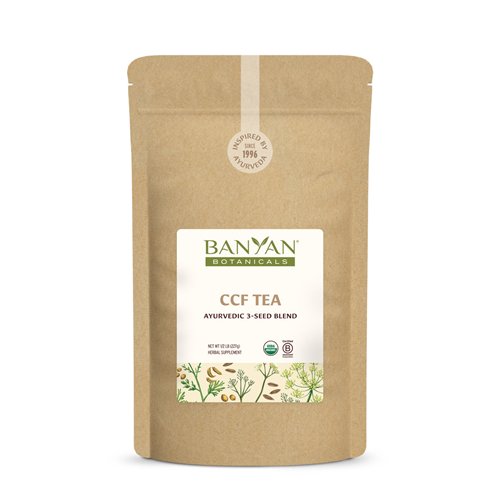
- Format
- Tea
- Type
- Herbal and traditional herbal
- Tradition
- Ayurvedic formula
- Cost
- $0.37 per two-teaspoon serving ($21.99 for a half pound, 60 servings, at Banyan, Amazon and Vitacost); the 3.5 oz pouch is $0.60 a serving
- Customer rating
- 4.6 out of 5 from 856 ratings from Amazon
What customers consistently report
- Less bloating and gas after meals
- A mild, balanced, soothing flavor
- Fresh-tasting seeds
Those are the themes that recur across the reviews. Moderate review confidence — 4.6 from 856 Amazon ratings on the brand-run listing, and 4.71 from 70 reviews on Banyan’s own Judge.me widget; Trustpilot has an unclaimed profile with 8 brand-wide reviews.
The mechanism, as the brand describes it
Cumin, coriander and fennel are culinary seeds that Ayurvedic texts and the brand group as digestive spices, and Banyan describes the blend as cooling and as strengthening the digestive fire without aggravating pitta. In modern studies, fennel and cumin preparations have been tested for gas passage, bloating and bowel movement after surgery and in IBS, mostly as oils or extracts. The proposed actions involve smooth-muscle relaxation and faster gas and stool transit, but those were not measured for this blend. The label gives no weight for any single seed, so the amounts used in trials cannot be compared with a cup of this tea. The brand’s detox and cleansing language has no trial behind it.
What has actually been tested
The evidence here is for the seeds and their oils, not this tea. An uncontrolled pilot of 57 people with IBS used cumin essential oil and reported less pain and bloating, and a trial of fennel fruit tea after gynecologic surgery (159 women, 5 g a cup) shortened the time to first flatus by about 11 hours. No trial tests cumin, coriander and fennel together, and none of coriander alone was found.
What the panel prints, and what it leaves out
The label prints a single 3,840 mg proprietary-blend line for 2 teaspoons, with the three seeds named but not weighed. Banyan states that its products are tested for arsenic, cadmium, lead and mercury at independent third-party labs, but it publishes no certificate or result for this tea. The pouch states organic certification by QAI and manufacture in India.
Herb entries for what is in it: Fennel. Each one gives the plant, what the traditions use it for, the trials, doses and the safety record.
When it makes sense
The symptoms it is scored against are bloating, gas and general abdominal discomfort. It fits someone whose priority is day-to-day comfort or handling meals. CCF Tea can match on symptoms and still lose to something else once your history, your format and your medicines are in.
Where it falls short of the brief
The dietary claims the label makes are vegan, gluten-free and no added sweeteners. If you are pregnant or breastfeeding or taking prescription medication, the quiz leaves this product out of your results. The flag is about who should make that decision, not about the product itself. A tea only works if you will take it as often as the label directs.
Side effects and what to be aware of
Some reviewers dislike the taste or the lingering smell of boiling it, a few say it did not help their digestion, and a few find the price high. The pouch advises consulting a practitioner if pregnant, nursing, taking medications or with a medical condition, and Vitacost’s page prints a California Prop 65 reproductive-harm warning.
Questions people ask
Does Banyan CCF tea work for bloating?
Banyan says the tea supports digestion and a comfortable post-meal experience, and reviewers mention less bloating (Amazon’s summary counts 33 of 33 healthiness mentions as positive). No trial tested this blend; the nearest evidence is a 57-person IBS pilot of cumin oil without a placebo group and trials of fennel tea after surgery.
Is Banyan CCF tea safe?
It is three culinary seeds, caffeine free, and the pouch tells pregnant or nursing people and those taking medication to ask a practitioner first. Vitacost shows a California Prop 65 reproductive-harm warning on its listing, without naming a substance. Banyan states third-party testing for four heavy metals but publishes no result for this tea.
Does Banyan CCF tea have side effects?
No side effect is listed on the label. Reviewers mention taste and smell they did not like, and a few say it did not help. Banyan tells customers it has a 90-day refund policy.
How much does Banyan CCF tea cost?
The half-pound pouch is $21.99 at Banyan, Amazon and Vitacost; at the label’s 60 servings that is about $0.37 a serving (a serving is 2 teaspoons in 16 oz of water). The 3.5 oz pouch is $14.99 for 25 servings, about $0.60. AutoShip takes 15% off at Banyan.
Is CCF tea the same as detox tea?
Banyan describes it as supporting gentle cleansing and the body’s natural ability to detox, which are brand claims. The blend is cumin, coriander and fennel seeds with no laxative herb, and no trial of detoxification was found.
A word before buying. Anyone pregnant or breastfeeding, or taking prescription medication should run CCF Tea past a doctor or pharmacist. What is written here is research, not medical advice.
Would it come out on top for you?
Answer the quiz to see whether CCF Tea fits your case or whether a product in the same role fits better.
Take the quiz →Free. Private. Nothing to sign up for.
Its peers in the catalog
These sit in the same role as Banyan Botanicals CCF Tea — discomfort and cramping — so they are the sensible things to weigh it against.
See all the products we have researched →
Further reading
The guides behind the category, written from the trials rather than the labels.