Parasite cleanses
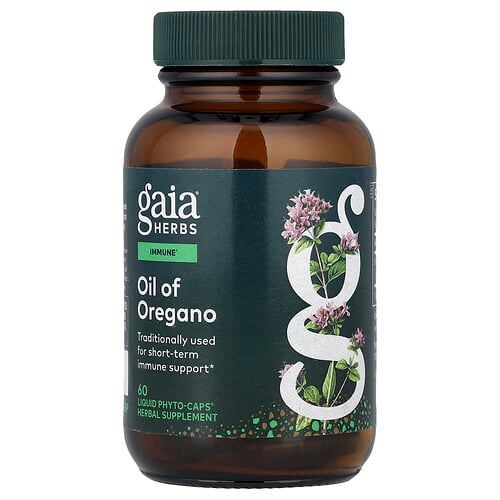
Gaia Herbs Oil of Oregano
A standardized oregano oil capsule with a stated carvacrol content, meant for short courses only.
- Format
- Capsule
- Type
- Botanical antimicrobial
- Cost
- $0.93 a day
- Customer rating
- See the reviews on iHerb
Not sure it suits your symptoms? The quiz matches one product to you in one to three minutes.
How it is meant to work
Oregano oil contains carvacrol and thymol, aromatic compounds whose membrane-disrupting activity is a plausible laboratory reason to investigate them against microbes. Gaia makes that idea more specific than most products: each liquid capsule states 230 mg of oregano extract, standardized to at least 27 mg carvacrol and no more than 5 mg thymol, rather than hiding the herb in a proprietary blend. The capsule also avoids having to measure a pungent oil. That said, standardization makes the label interpretable, not the outcome proven. The closest human evidence used different multi-herb products, did not disclose their carvacrol content, and was neither randomized nor a trial of oregano alone. Laboratory antimicrobial activity is not a basis for expecting the same result in a person, and no trial tests this capsule at this dose. Its short two-to-four-week label limit also belongs in the decision. This mechanistic rationale cannot establish a human benefit, particularly with a short labeled use window.
On the label
The best label transparency of the cleanse products here. Each capsule states 230 mg of supercritical oregano extract standardized to at least 27 mg carvacrol and no more than 5 mg thymol, with only sunflower lecithin and a vegan capsule alongside it — no proprietary blend. The brand says every batch is tested for microbes and heavy metals in its own ISO-certified on-site laboratory, which is a real process but is still the company testing itself; no NSF, USP or Informed Sport mark is claimed. On safety, oregano is the cleanest ingredient in this section: the NIH’s LiverTox database records no published cases of liver injury from it, and the practical issue is mucosal irritation.
The encyclopedia pages for its herbs.
The evidence, such as it is
The closest human data is weak and does not test this product. It is a retrospective, non-randomized chart review of 104 people with breath-test-confirmed SIBO, comparing herbal treatment against the antibiotic rifaximin. The herbal arm normalized in 46% of cases against 34% on rifaximin, but that difference was not statistically significant, and the herbal arm used entirely different multi-herb products whose carvacrol content was never disclosed. So there is no trial of oregano on its own, at this dose, for anything.
When something else fits better
On diet, the label backs vegan, gluten-free, dairy-free and minimal ingredient list. We flag this product for anyone pregnant or breastfeeding, which is a caution about who should be deciding, not a claim about the product. It only helps if the capsule is taken as often as the label directs.
Side effects, and who should check first
The brand does not recommend it in pregnancy or breastfeeding because the safety data is not there, and the retail label says do not use during pregnancy or lactation. The label also limits use to two to four weeks, which is worth taking seriously rather than treating as a suggestion. No drug-interaction warning is published on either the brand or retailer page.
If you are pregnant or breastfeeding. Ask a doctor or pharmacist before Oil of Oregano; this page describes the product and the evidence, it does not prescribe.
Is it the one for your symptoms?
A few questions about your symptoms and routine, and the quiz tells you whether Oil of Oregano or another product is the closer match.
Take the quiz →Three minutes, no account.
Others we researched for the same job
Parasite cleanses: that is the job Gaia Herbs Oil of Oregano does, and these are the other entries doing it.
See all the products we have researched →
Related reading
Longer reads on the mechanism and the evidence for products like this one.