
Taken with meals
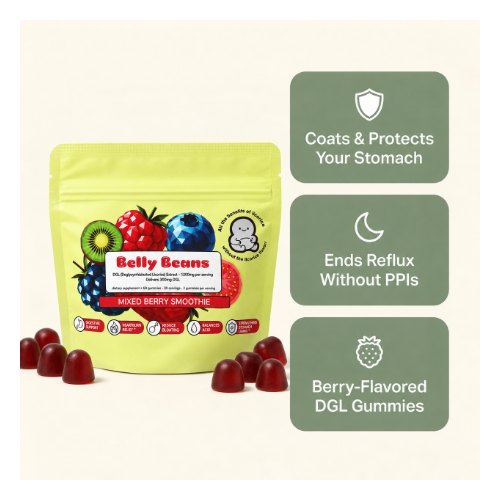
Mollara Labs Belly Beans DGL Gummies
A berry-flavored deglycyrrhizinated licorice gummy taken two at a time before meals, marketed for heartburn and reflux.
- Format
- Gummy
- Type
- DGL licorice (mucosal protectant)
- Cost
- $2.22 a day at the brand’s four gummies a day; $1.11 at one two-gummy serving
- Customer rating
- 2.75 out of 5 from 728 ratings from mollaralabs.com
What customers consistently report
- Less heartburn and reflux within days to a month
- Cutting back on acid medicine, as reviewers report it
- A berry taste and sleeping through the night
Those are the themes that recur across the reviews. Low review confidence — the brand’s headline 4.8 from 2,877 is typed text, while its own review feed shows 2.75 from 728 (726 flagged as verified buyers), and there is no Trustpilot, Amazon or Better Business Bureau profile for any of its company names.
Why it might work
Licorice root contains glycyrrhizin, which can raise blood pressure and lower potassium, so DGL products remove most of it; what remains includes flavonoids that, in laboratory and animal work, increase mucus production and protect the stomach lining from irritants. The brand’s argument is that this coats and protects the lining instead of blocking acid, as acid-reducing drugs do. In people, the evidence is two placebo-controlled trials of a standardized extract at doses that could not be compared with this label, plus older ulcer trials that were negative. The label does not state the extract ratio, flavonoid content or glycyrrhizin left in the gummy, so these cannot be checked, and a gummy that is chewed and swallowed in seconds is not shown to coat the esophagus.
What the research supports
No trial of Belly Beans was found. The modern human evidence for licorice with the glycyrrhizin removed is for a branded, standardized extract, GutGard: a 200-person, 28-day placebo-controlled trial in reflux symptoms found better heartburn and regurgitation scores, and a 30-day trial in functional dyspepsia used 75 mg twice a day. This label names no extract or standardization, and the older DGL trials in peptic ulcer, at 760 mg three times a day, found no benefit over placebo. The dose and extract in the reflux trial could not be matched to this gummy.
What the label discloses
The brand shows three versions of the label: 400 mg of DGL extract, 100 mg of a 4:1 DGL extract (equal to 400 mg of root) with 3 g of added sugar from cane sugar and tapioca syrup, and a pouch graphic reading 1,200 mg of extract delivering 300 mg of DGL. The web copy says no added sugar, which the older panel contradicts. A third-party-tested badge appears without a laboratory name or certificate, and the store is run under several company names.
Who this tends to suit
We match this product to people reporting heartburn or reflux, general abdominal discomfort and bloating. It fits someone whose priority is day-to-day comfort or handling meals. Whether it is the best fit for you depends on the rest of your answers — what you have already tried, what format you will take, and anything that has to be ruled out.
Where it may not fit
The label supports gluten-free. A gummy only works if you will take it as often as the label directs.
Side effects and what to be aware of
Reviewers on the brand’s own feed give 2.75 stars from 728 reviews, and about 108 of 376 low-star reviews describe subscription charges they did not expect, hard cancelling, and refunds that need an unopened item and customer-paid return shipping. Others report no effect, orders that never came or arrived short, sticky gummies, and added sugar. One reviewer says her blood pressure rose. No pregnancy, medication or blood-pressure warning was found on the label images, and the page says to take it alongside a PPI while working with a doctor.
Common questions
Does Belly Beans work?
No trial of Belly Beans was found. A placebo-controlled trial of a standardized, deglycyrrhizinated licorice extract (GutGard) found less heartburn and regurgitation over 28 days in 200 people, but this label names no such extract. On the brand’s own review feed 39% of 728 reviews are four or five stars (many say relief within a week to a month and some say they came off omeprazole) and 52% are one or two stars (about 80 say no effect).
Is Belly Beans safe, and what are the side effects?
The label images read show one active, DGL extract, and no pregnancy, nursing, medication or blood-pressure warning; the footer says to consult a healthcare provider before starting any supplement. The brand says the glycyrrhizin that can raise blood pressure has been removed but does not print how much remains, and one reviewer reports a blood-pressure rise. The older panel lists 3 g of added sugar a serving.
How much does Belly Beans cost?
The page offers three pouches one time for $99.99 ($33.33 a pouch) and five for $149.99 ($30.00 a pouch), or subscriptions at $59.99 for two pouches and $79.99 for three. A pouch holds 60 gummies, so at the brand’s four a day a pouch lasts 15 days, about $2.22 a day at $33.33 a pouch; at one two-gummy serving a day it is about $1.11.
Belly Beans vs omeprazole or Tums: what is the difference?
Omeprazole and Tums are over-the-counter medicines with Drug Facts panels that reduce stomach acid; Belly Beans is a dietary supplement with a Supplement Facts panel and no acid-reducing ingredient. The ads say it protects the stomach lining so people can come off acid medicine, but no trial of this product tests that, and the page itself says to take it alongside a PPI while working with a doctor.
How do I cancel a Belly Beans subscription or get a refund?
The brand’s own review feed holds many complaints (about 108 of 376 low-star reviews) about unexpected subscription renewals, hard cancelling and refunds. The subscription policy says to cancel through the customer portal or by email, effective immediately, with renewal refunds requested within seven days; the refund page offers a 30-day return of unopened product with customer-paid return shipping, while the page and ads advertise a 60-day guarantee. No Trustpilot, Better Business Bureau or Amazon profile was found.
Is this the right one for you?
The quiz works out which of the products we have researched fits your symptoms, your routine and what you have already tried — and tells you plainly if none of them do.
Take the quiz →Free. Private. Nothing to sign up for.
Others we researched for the same job
These sit in the same role as Mollara Labs Belly Beans DGL Gummies — taken with meals — so they are the sensible things to weigh it against.
See all the products we have researched →
Related reading
Background on how this type of product works, read from the trial evidence.