Discomfort and cramping
PiPi Tea Organic Hibiscus Tea Bags
A caffeine-free, single-ingredient organic hibiscus tea in 30 bags, advertised for bloating and digestion and sold on its own pages for blood pressure.
- Format
- Tea, once a day
- Type
- Herbal
- Cost
- $1.17 a day
- Customer rating
- 4.3 out of 5 from 586 ratings from Amazon
What customers consistently report
- A tart, fruity flavor without sugar or caffeine
- A calming evening cup
- Easier digestion or more regular bowel movements for some
Those are the themes that recur across the reviews. Moderate review confidence — the 4.3 from 586 Amazon ratings is independent of the brand’s site and sits near Trustpilot’s 4.2 from 1,686, but the brand’s own Judge.me widget averages 3.37 across its newest 1,000 reviews, and several other Amazon sellers list a tea under the same name.
The mechanism, as the brand describes it
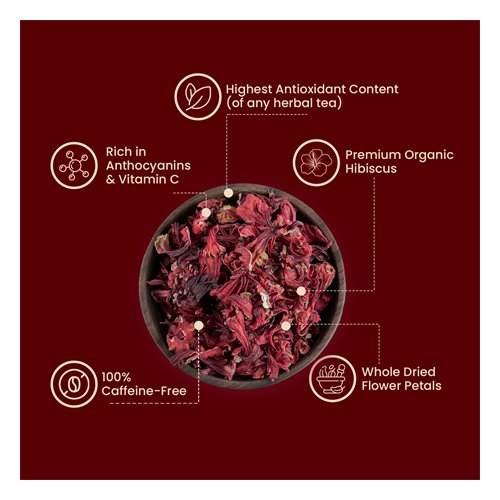
Hibiscus calyxes are rich in organic acids, anthocyanins and vitamin C, and in trials the tea lowers blood pressure, possibly through a mild ACE-inhibiting and diuretic action. The brand’s gut claims (improved digestion and reduced bloating) are not tied to a mechanism on its pages, and the only gut-related findings in the research are from animals or the laboratory. Hibiscus is a tart infusion with no fiber, no probiotic and no stimulant laxative, so any effect on bowel habit would rest on the fluid and the ritual rather than on a gut-active compound the label names. The one ingredient and its 2 g amount can be checked on the panel; the anthocyanin content the brand highlights cannot.
What has actually been tested
We found no trial of this tea, and no human trial of hibiscus for bloating, constipation or any other gut symptom turned up in PubMed or ClinicalTrials.gov. The research on hibiscus tea is about blood pressure: a 65-person placebo-controlled trial of three cups a day for six weeks cut systolic pressure by 7.2 against 1.3 mm Hg, and meta-analyses of 5 to 26 trials report drops of about 5 to 8 mm Hg. Those results say nothing about digestion, and one bag a day is a third of the trial amount.
What the panel prints, and what it leaves out
The panel, headed Hibiscus Facts, lists one ingredient, organic hibiscus flower at 2,000 mg a serving, with no laxative herb, sweetener or additive. The brand claims third-party testing for heavy metals and pesticides but names no laboratory and links no certificate. The panel, the ad funnel and the store page disagree on steeping time (1 to 2 minutes or 5 to 7) and on tablespoon versus bag directions.
Herb entries for what is in it: Hibiscus. Each one gives the plant, what the traditions use it for, the trials, doses and the safety record.
When it makes sense
The quiz pairs it with answers that mention bloating. It fits someone whose priority is day-to-day comfort. Organic Hibiscus Tea Bags can match on symptoms and still lose to something else once your history, your format and your medicines are in.
Where it falls short of the brief
The dietary claims the label makes are gluten-free, no added sweeteners, dairy-free, vegan and minimal ingredient list. If you are taking prescription medication, the quiz leaves this product out of your results. The flag is about who should make that decision, not about the product itself. A tea only works if you will take it once a day, every day.
Side effects and what to be aware of
Reviewers report taste and calm, a few report easier digestion, and a recurring group report stomach upset, nausea or diarrhea. The larger complaint pattern is billing: unexpected subscriptions and extra shipments, trouble cancelling, and refunds that were partial or refused. The brand says to consult a provider if you take blood pressure medication, since hibiscus can add to its effect.
Questions people ask
Does PiPi Tea hibiscus tea help with bloating or constipation?
No trial of this tea, or of hibiscus for bloating or constipation, was found. The brand’s own pages are about blood pressure, and the gut lines are “improved digestion and reduced bloating” in a results timeline. A few reviewers say it helped regularity and others report stomach upset, nausea or diarrhea.
What is in PiPi Tea hibiscus tea?
One ingredient: organic hibiscus flower, 2,000 mg per serving, 30 servings a pack, with no sweetener, no caffeine and no laxative herb. The panel is headed “Hibiscus Facts” and says free of soy, dairy, gluten and artificial additives.
How much does PiPi Tea cost per cup?
One 30-bag pack is $34.95 on the brand’s store and on Amazon, about $1.17 a cup. The ad funnel advertises three packs for the price of two, and reviewers report $59.97 for three packs and $65 on renewals.
Does PiPi Tea bill for subscriptions?
A recurring group of reviewers say they did not realize they had signed up for a subscription, struggled to cancel, or received partial refunds; 83 of the newest 1,000 reviews on the brand’s widget mention recurring shipments and average 2.0 stars. The refund policy says a refund is not guaranteed, while the store page promises a full refund.
Is PiPi Tea hibiscus safe, and what are the side effects?
The brand says to consult a provider if you take blood pressure medication, since hibiscus can add to the effect of such drugs. Some reviewers report stomach ache, nausea, diarrhea or a reaction; the brand also says it is safe in pregnancy, a claim that was not independently checked.
A word before buying. Anyone taking prescription medication should run Organic Hibiscus Tea Bags past a doctor or pharmacist. What is written here is research, not medical advice.
Would it come out on top for you?
Answer the quiz to see whether Organic Hibiscus Tea Bags fits your case or whether a product in the same role fits better.
Take the quiz →Free. Private. Nothing to sign up for.
Its peers in the catalog
These sit in the same role as PiPi Tea Organic Hibiscus Tea Bags — discomfort and cramping — so they are the sensible things to weigh it against.
See all the products we have researched →
Further reading
The guides behind the category, written from the trials rather than the labels.