Discomfort and cramping
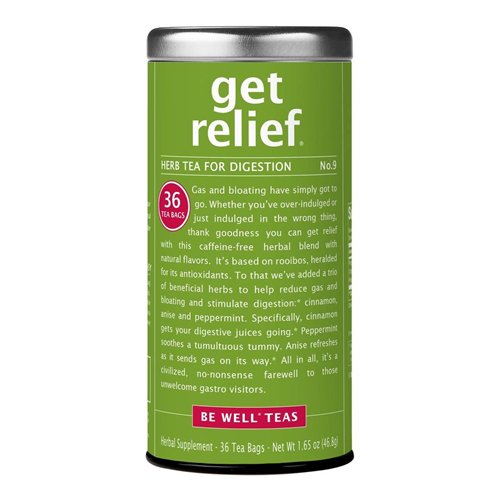
The Republic of Tea Be Well Get Relief No. 9 Herb Tea
A caffeine-free rooibos, cinnamon, anise, peppermint and stevia tea in 36 bags, sold for gas and bloating, with a single 1,275 mg blend per bag.
- Format
- Tea
- Type
- Herbal and traditional herbal
- Cost
- $0.42 per cup on Amazon ($15.00 for 36 bags); $0.38 for the tin and $0.37 for the refill on the brand’s site
- Customer rating
- 4.7 out of 5 from 153 ratings from Amazon
What the reviews repeat
- Easing gas and bloating after a heavy meal
- A good after-dinner cinnamon-and-mint cup
- A caffeine-free flavor that needs no sugar
Those are the themes that recur across the reviews. Moderate review confidence — 4.7 from 153 Amazon ratings is independent, while the brand’s own page shows a higher 4.88 from 134 reviews collected through its own review app, and no iHerb, Walmart or Target rating exists.
What the ingredients do, in theory
Anise seed and peppermint contain volatile oils (anethole, menthol) that relax gut smooth muscle in laboratory studies and are the herbs traditionally used for gas, while cinnamon is credited on the tin with getting digestive juices going and rooibos is the caffeine-free base. Anise has been tested as powder and oil capsules, peppermint as oil, and cinnamon as oil capsules, which hold far more of those compounds than a steeped bag. Stevia is a calorie-free sweetener and has no digestive role in this blend. The panel shows the five herbs and their combined 1,275 mg, not how much of each is in a bag or how much oil reaches the cup after 5 to 7 minutes.
Reading the label
The panel prints one proprietary blend of 1.3 g (1,275 mg) a bag across rooibos, cinnamon, anise, peppermint and stevia leaf, plus natural cinnamon flavor, with no individual amounts. Only the rooibos is marked organic. The brand says its teas are inspected and tested at origin but names no laboratory or certificate, and the tin warns pregnant or nursing women to consult a physician.
Each herb on the label has its own page: Cinnamon, Anise, Peppermint. The pages cover traditional use, trials, doses and interactions.
What the research supports
No trial of this tea was found. Of its five herbs, anise has the most human gut work: 3 g of anise powder after each meal cut dyspepsia scores in a 107-patient trial, and anise oil capsules helped 120 IBS patients, but 50 g a day of aniseed did not change bloating in a 225-person trial. Cinnamon oil capsules did no better than placebo in 64 dyspepsia patients, no trial of peppermint tea exists, and no human gut trial was found for rooibos. A bag holds 1,275 mg of all five herbs together, far below those doses.
The people it is built for
In the quiz it comes up for people who describe bloating, gas and symptoms that follow particular foods. Someone whose aim is day-to-day comfort or handling meals is who it is matched to. A symptom match is the first filter, not the last: Be Well Get Relief No. 9 Herb Tea has to survive your previous products, your format and your exclusions too.
When to look elsewhere
Its packaging states gluten-free. We flag this product for anyone pregnant or breastfeeding, and the quiz removes it rather than recommending it in those cases. That is a caution about who should be deciding, not a claim about the product. Form counts: Be Well Get Relief No. 9 Herb Tea is a tea, and the trials behind it assume it is taken as often as the label directs.
What to watch for
A minority of reviewers dislike the stevia or the strong anise, find the peppermint weak, or are unsure it does anything for digestion. The tin and page say to consult a physician or healthcare practitioner before use in pregnancy or breastfeeding; no medication or condition warning is printed.
What people want to know
Does Republic of Tea Get Relief tea work for gas and bloating?
No trial of this tea was found. The brand and tin say it helps reduce gas and bloating, and reviewers on the brand’s page and Amazon mostly say it does (4.7 from 153 Amazon ratings, 17 of 20 digestive-effect mentions positive), while a few are unsure or prefer another tea. The research on its herbs is in powders, oils and capsules at much higher doses.
What is in Get Relief tea?
Organic rooibos leaf, cinnamon bark, anise seed, peppermint leaf and stevia leaf in a 1,275 mg proprietary blend per bag, plus natural cinnamon flavor. It has no caffeine and no laxative herb such as senna, and individual herb amounts are not printed.
Is Get Relief tea safe, and does it have side effects?
The tin and page say not to use it during pregnancy or lactation without a practitioner’s advice. No side-effect pattern shows in the reviews read; the complaints are about stevia sweetness, strong anise and weak peppermint.
How much does Get Relief tea cost per cup?
$13.75 for a 36-bag tin on the brand’s site, about $0.38 a cup, $13.25 for a refill bag, about $0.37, and $15.00 on Amazon, about $0.42.
Get Relief vs Get It Going?
Get Relief is rooibos with cinnamon, anise, peppermint and stevia for gas and bloating. The brand’s Get It Going (No. 2) lists senna leaf and senna leaf extract, a stimulant laxative, and is a different product for constipation.
Check first. If you are pregnant or breastfeeding, ask a doctor or pharmacist before starting Be Well Get Relief No. 9 Herb Tea; nothing here replaces that conversation.
Not sure this is your match?
Eight questions, one answer: where Be Well Get Relief No. 9 Herb Tea lands for you, and why.
Take the quiz →No sign-up, no email, about three minutes.
What else does this job
These sit in the same role as The Republic of Tea Be Well Get Relief No. 9 Herb Tea — discomfort and cramping — so they are the sensible things to weigh it against.
See all the products we have researched →
Guides that explain the category
Background on how this type of product works, read from the trial evidence.