Discomfort and cramping
Snap Dynasty Stomach Chi
An 11-herb Chinese blend built on the Liu Jun Zi herbs (pinellia, poria, ginseng, atractylodes and others) in a gelatin capsule, taken two at a time up to three times a day.
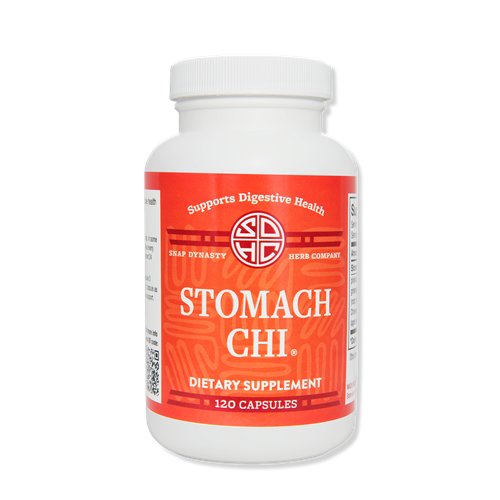
- Format
- Capsule
- Type
- Traditional herbal
- Tradition
- Traditional Chinese medicine formula
- Cost
- $1.50 per day at two capsules three times a day ($29.99 for 120 on the brand site, $29.98 on Amazon, a 20-day bottle); the 60-capsule bottle is $17.99
- Customer rating
- 4.5 out of 5 from 162 ratings from Amazon
What the reviews repeat
- Relief from an upset stomach within about 20 to 30 minutes
- A bottle kept on hand for travel and big meals
- Years of as-needed use
Those are the themes that recur across the reviews. Moderate review confidence — Amazon shows 4.5 from 162 ratings on a listing sold by a third-party seller, the brand Judge.me widget shows 4.75 from 56 reviews dated across eight years, and iHerb showed 4.4 from 33 in the sweep; no Trustpilot profile was read.
What the ingredients do, in theory
Snap Dynasty says the blend strengthens what TCM calls spleen and stomach chi, allowing the digestive system to process nourishment, and that it fits bloating after meals, a heavy feeling and indigestion. The herb list is a Xiang Sha Liu Jun Zi-type base with magnolia bark and perilla leaf added; single herbs have small trials (ginger sped gastric emptying in 11 people without changing symptoms; a licorice extract lowered dyspepsia scores in a trial of a different extract). None tested this combination or dose, and the label does not show how much of each herb a serving holds.
Reading the label
The panel is one 1.0 g blend per two capsules with eleven herbs in order and no per-herb amounts. The brand states heavy metal, pesticide and microbial testing, an independent GMP certification and aristolochic acid testing, but names no lab or certifier and publishes no results. The capsule is bovine gelatin with non-GMO corn starch, and the brand claims gluten-free. No Aristolochia species or mineral ingredient is on the label.
Each herb on the label has its own page: Pinellia, Poria, Ginseng, Atractylodes, Magnolia bark, Perilla, Ginger, Licorice, Orange peel. The pages cover traditional use, trials, doses and interactions.
What the research supports
No trial of this blend was found. Seven of its eleven herbs are seven of the eight in rikkunshito (Liu Jun Zi Tang), which had mixed results in functional dyspepsia: 33.6 percent against 23.8 percent responders on placebo in 247 people (P = 0.09), but a benefit over placebo in a 128-person trial. Those trials used 7.5 g a day of extract against this label’s 3.0 g a day of a blend, and the form (powder or extract) is not stated.
The people it is built for
Its symptom profile covers bloating, general abdominal discomfort and symptoms that follow particular foods. Someone whose aim is day-to-day comfort or handling meals is who it is matched to. It is still only a candidate until your other answers are in: previous products, the format you will take, and the things that have to be excluded.
When to look elsewhere
Its packaging states gluten-free. Stomach Chi is held back from the results of anyone taking prescription medication; a prescriber should weigh it for them, which is a statement about the decision rather than the product. The format matters too: a capsule asks you to take it as often as the label directs.
What to watch for
Three of 56 brand reviews are 1 star for no effect, one reviewer objects to the corn starch, another says relief lasts two to four hours, and one reports ordering and customer service problems. The brand says it has no contraindications; the label includes ginseng and licorice with no specific wording, and the brand says it is not designed for constipation.
What people want to know
Does Snap Dynasty Stomach Chi work?
No trial of this blend was found. Seven of its herbs are in rikkunshito, which had mixed trial results in functional dyspepsia at a larger daily dose. Amazon reviewers rate it 4.5 from 162 and mostly describe fast relief of an upset stomach; three of 56 brand reviews say it did not work.
Is Stomach Chi safe?
The brand says it is safe for all ages with no contraindications, and the label prints no warning beyond keeping it from children. It contains ginseng and licorice, which have documented interactions with warfarin and with blood-pressure medicines respectively, and the footer advises consulting a healthcare professional before starting any new herbal supplement. No FDA warning letter or recall was found for the brand.
What are the side effects of Stomach Chi?
None are listed on the label or product page. Reviewers do not report side effects; complaints are that it did not work, that it contains corn starch, and that relief wore off after a few hours. The daily maximum on the brand page is 24 capsules for adults.
How much does Stomach Chi cost?
$29.99 for 120 capsules on the brand site and $29.98 on Amazon. The standard dose is two capsules three times a day, so a bottle lasts 20 days, or $1.50 a day; the 60-capsule bottle is $17.99. The brand offers 20 percent off a first order and a subscription discount, and refunds purchases made on its own site within 30 days.
Stomach Chi vs Health Concerns Six Gentlemen: what is the difference?
Both are Chinese herbal capsules built on Liu Jun Zi herbs. Stomach Chi lists eleven herbs (including pinellia, poria, ginseng, magnolia bark and perilla) in a 1.0 g blend and costs $1.50 a day at the label dose. Six Gentlemen lists eight (codonopsis, atractylodes, ginger, licorice, tangerine peel, costus, cardamom) in a 1,349 mg blend, without pinellia or poria, at $1.99 a day.
Check first. If you are taking prescription medication, ask a doctor or pharmacist before starting Stomach Chi; nothing here replaces that conversation.
Does it fit your routine?
The quiz takes about three minutes and tells you whether Stomach Chi is the right call for your symptoms, your medicines and your routine.
Take the quiz →No sign-up, no email, about three minutes.
What else does this job
If Snap Dynasty Stomach Chi is on your list, these belong on it too; each is researched for the same job, discomfort and cramping.
See all the products we have researched →
Guides that explain the category
Background on how this type of product works, read from the trial evidence.