Discomfort and cramping
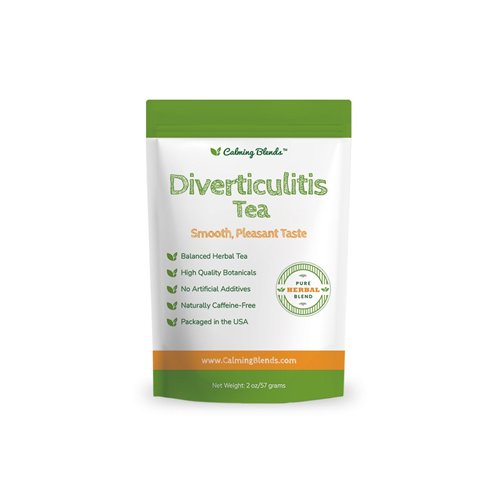
Calming Blends Diverticulitis Tea
A caffeine-free loose-leaf blend of peppermint, chamomile, marshmallow leaf and wild yam root, sold under a diverticulitis name, to drink two or three cups a day.
- Format
- Tea
- Type
- Herbal
- Cost
- $0.53 per cup; the pouch directs two to three cups a day
- Customer rating
- 4.5 out of 5 from 4,259 ratings from Amazon
The themes in the reviews
- Soothing during a flare-up
- A pleasant chamomile and peppermint taste
- A small amount going a long way
Those are the themes that recur across the reviews. Moderate review confidence — the 4.5 from 4,259 ratings is on Amazon’s independent platform, but the brand’s own site shows only a curated testimonial page and no review app, no Trustpilot profile was found, and the Walmart rating could not be read.
Why it might work
Peppermint is the herb with a stated mechanism: its menthol relaxes smooth muscle in lab and gut studies, which is why the oil capsules are studied for cramping in irritable bowel syndrome. Chamomile is traditionally used as a calming, antispasmodic tea, and marshmallow leaf is described by the brand for its mucilage, a slippery fiber that coats tissue in the lab. The brand says wild yam contains muscle-relaxing alkaloids, a starred claim with no source on its page. Diverticulitis is inflammation of pouches in the colon wall, and none of these herbs has been tested on that in people. How much of each herb is in a cup is not printed, so the trial doses of peppermint cannot be compared.
What the trials show
We found no trial of this tea or of its four herbs for diverticulitis. The nearest herbal-tea trial used burdock, which is not in this blend: an open-label trial of 161 people found acute diverticulitis returned in 10.6% of burdock tea drinkers against 31.8% of untreated people over about two years. The peppermint evidence is for oil capsules in irritable bowel syndrome, where 10 trials of 1,030 people favored peppermint oil over placebo, with more side effects and very low evidence quality. No human gut trial of marshmallow leaf or wild yam root turned up.
What the label discloses
The pouch lists four herbs with no per-herb weights, only 1.4 g of the mix per serving and 36 servings per 2 oz pouch, and the order differs between the pouch and the Amazon listing. Amazon’s title says organic, but the pouch image shows no organic seal and the brand’s FAQ says only that its suppliers are certified organic. No third-party test is named. The pouch itself says the tea’s name reflects traditional herbal inspiration only and that it is not intended to have any effect on disease or medical conditions.
Read more on the plants in the formula: Peppermint, Chamomile, Marshmallow root, with the trials, doses and cautions for each.
Who this tends to suit
The quiz pairs it with answers that mention cramping, abdominal pain and general abdominal discomfort. It is scored for a goal of pain and tenderness or day-to-day comfort. Whether it is the best fit for you depends on the rest of your answers — what you have already tried, what format you will take, and anything that has to be ruled out.
Where it may not fit
The label supports gluten-free, dairy-free, no added sweeteners and minimal ingredient list. If you are pregnant or breastfeeding or taking prescription medication, expect Diverticulitis Tea to be missing from your results on purpose; that decision is routed to a clinician, not made here. Like any tea, it depends on being taken as often as the label directs.
Reactions and warnings
Reviewers mostly report soothing and a pleasant taste, with a minority reporting no effect, a bad smell or taste, cramps, diarrhea, nausea or headaches, and many calling the price high for the pouch size. The pouch says to consult a healthcare provider if pregnant, breastfeeding or taking prescription medication, and says the tea is not intended to affect disease.
The questions that come up
Does Calming Blends Diverticulitis Tea work?
No trial of this tea, or of its four herbs for diverticulitis, exists. Amazon reviewers (4.5 from 4,259 ratings) mostly describe it as soothing during flare-ups, and a minority report no benefit or stomach upset. The pouch states that the name reflects traditional herbal inspiration only and that the product is not intended to have any effect on disease.
What is in Calming Blends Diverticulitis Tea?
Four herbs: peppermint leaves, chamomile flowers, marshmallow leaves and wild yam root, in that order on the pouch. There is no caffeine, sweetener or laxative herb, and the label gives no weight for each herb, only 1.4 g of the mix per 2-teaspoon serving.
How much does Calming Blends Diverticulitis Tea cost per cup?
A 2 oz pouch is $18.95 on the brand’s site and on Amazon and makes 36 cups, about $0.53 a cup. At the pouch’s two to three cups a day that is about $1.05 to $1.58 a day. Amazon Subscribe & Save was $17.05, about $0.47 a cup.
Does Calming Blends Diverticulitis Tea have side effects?
Some Amazon reviewers report cramps, diarrhea, nausea or headaches, and 15 of 46 side-effect mentions were negative. The pouch says to consult a healthcare provider if pregnant, breastfeeding or taking prescription medication. Peppermint oil in trials had more adverse events than placebo.
Calming Blends Diverticulitis Tea vs burdock tea for diverticulitis?
Burdock tea has the only herbal-tea trial in diverticulitis found: an open-label trial of 161 people in which acute diverticulitis returned in 10.6% of burdock drinkers and 31.8% of untreated people. Calming Blends contains no burdock and has no trial of its own.
A word before buying. Anyone pregnant or breastfeeding, or taking prescription medication should run Diverticulitis Tea past a doctor or pharmacist. What is written here is research, not medical advice.
Is Diverticulitis Tea the one, or is something else?
The quiz weighs your symptoms and routine and names one match, which may or may not be Diverticulitis Tea.
Take the quiz →Free, private, and it names one product.
Alternatives in the same role
If Calming Blends Diverticulitis Tea is on your list, these belong on it too; each is researched for the same job, discomfort and cramping.
See all the products we have researched →
Background reading
Where the numbers on this page come from, explained at length.