
Discomfort and cramping
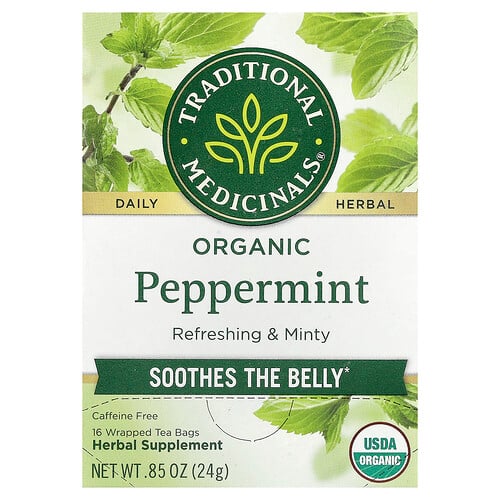
Traditional Medicinals Organic Peppermint Tea
A single-ingredient peppermint leaf tea for a gassy, uncomfortable stomach after eating, with no trial evidence of its own.
- Format
- Tea, once a day
- Type
- Herbal
- Cost
- $0.44 a day
- Customer rating
- 4.7 out of 5 from 3,922 ratings from Amazon
What customers consistently report
- A settled stomach after a heavy meal
- A strong, clean peppermint flavor that is not overpowering
- Costing a few cents a cup
Those are the themes that recur across the reviews. High review confidence — 4.7 from 3,922 Amazon ratings on the 16-bag listing.
Why it might work
Menthol from peppermint leaf relaxes gut smooth muscle, which is why the herb has a long history for cramping and gas. In a tea, the menthol is released in the stomach in a small amount, so any effect is on the stomach itself and on the sensation of fullness rather than on the small intestine the capsule trials targeted. The warmth and the ritual do some of the work too, which is not nothing for a symptom as sensitive to context as bloating.
What the research supports
No trial of peppermint tea was found. The evidence people borrow for it belongs to enteric-coated peppermint oil capsules, which deliver a measured dose of oil to the small intestine and have a 12-trial meta-analysis in IBS. A cup of tea steeped for ten minutes contains a small, unmeasured fraction of that oil, released in the stomach, so the tea is a traditional remedy with a plausible ingredient rather than a tested product.
What the label discloses
The only ingredient is organic peppermint leaf; the brand states Non-GMO Project verification, kosher certification and compostable bags, and directs a covered 10-to-15-minute steep to extract more of the volatile oil. No menthol content is stated, and none is guaranteed. No third-party testing certificate is published.
Who this tends to suit
We match this product to people reporting bloating, gas and general abdominal discomfort. It fits someone whose priority is day-to-day comfort. Whether it is the best fit for you depends on the rest of your answers — what you have already tried, what format you will take, and anything that has to be ruled out.
Where it may not fit
The label supports vegan, gluten-free, dairy-free, no added sweeteners and minimal ingredient list. We flag this product for anyone pregnant or breastfeeding, and the quiz removes it rather than recommending it in those cases. That is a caution about who should be deciding, not a claim about the product. A tea only works if you will take it once a day, every day.
Side effects and what to be aware of
The peppermint oil trials were not done with tea: a cup delivers a small and variable amount of menthol with nothing to carry it past the stomach, and no trial of peppermint tea for gut symptoms was found. Peppermint relaxes the valve at the top of the stomach, so it can make heartburn worse. The label asks pregnant or nursing users to tell their practitioner.
Before you take this. Speak to a doctor or pharmacist first if you are pregnant or breastfeeding. Nothing on this page is medical advice, and no supplement diagnoses, treats, cures or prevents disease.
Is this the right one for you?
The quiz works out which of the products we have researched fits your symptoms, your routine and what you have already tried — and tells you plainly if none of them do.
Take the quiz →Free. Private. Nothing to sign up for.
Others we researched for the same job
These sit in the same role as Traditional Medicinals Organic Peppermint Tea — discomfort and cramping — so they are the sensible things to weigh it against.
See all the products we have researched →
Related reading
Background on how this type of product works, read from the trial evidence.