Discomfort and cramping
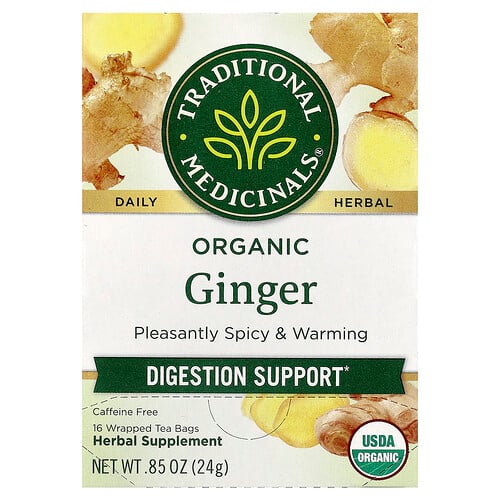
Traditional Medicinals Organic Ginger Tea
A pure ginger root tea for queasiness and a sluggish stomach, delivering a fraction of the ginger used in the nausea trials.
- Format
- Tea, once a day
- Type
- Herbal
- Cost
- $0.44 a day
- Customer rating
- 4.5 out of 5 from 82 ratings from traditionalmedicinals.com
Not sure it suits your symptoms? The quiz matches one product to you in one to three minutes.
The few accounts on record
- A settled stomach and less nausea
- A real, pure ginger taste with no other herbs
- A warming cup after meals or first thing in the morning
There is not enough independent feedback here to call those themes reliable. Low review confidence — 4.5 from 82 reviews on the brand’s own store (traditionalmedicinals.com).
Why it might work
Ginger’s pungent compounds, gingerols and shogaols, act on serotonin receptors in the gut and speed stomach emptying, which is the basis for its use in nausea and for the feeling that a meal is sitting. A cup of tea delivers a small amount of those compounds, so the effect is felt mostly in the stomach and soon after drinking. Heat and hydration help with the same feeling, which makes a plain tea hard to separate from the herb.
What the trials show
The ginger trials used capsules, not tea. Systematic reviews of ginger for nausea in pregnancy, after surgery and with chemotherapy pooled trials giving roughly 1 to 1.5 g of dried ginger a day in capsules and found it reduced nausea more than placebo in most settings, less consistently vomiting. A 2011 trial in functional dyspepsia found 1.2 g of ginger sped up stomach emptying without changing symptoms over the test period. A tea bag holds about 1.5 g of ginger before steeping and gives up only part of that, so a cup is a smaller and unmeasured dose. No trial of ginger tea was found.
What the label discloses
The only ingredient is organic ginger rhizome. The brand states Non-GMO Project verification, kosher certification and a covered 10-to-15-minute steep. No gingerol content is stated and no third-party test certificate is published.
Read more on the plants in the formula.

Who this tends to suit
The quiz pairs it with answers that mention nausea, general abdominal discomfort and bloating. It is scored for a goal of day-to-day comfort or handling meals. Symptoms get Organic Ginger Tea onto the shortlist; what you have tried, the format you will keep up and your medicines decide whether it stays there.
Where it may not fit
The label supports vegan, gluten-free, dairy-free, no added sweeteners and minimal ingredient list. For people pregnant or breastfeeding or taking prescription medication, the quiz excludes it rather than naming it, because that choice belongs with a prescriber. It is a caution about the decision, not a verdict on the product. The honest question before buying Organic Ginger Tea: will you take a tea once a day, every day?
Reactions and warnings
Ginger can worsen heartburn in some people and adds mildly to the effect of blood thinners. The label asks pregnant or nursing users to seek advice first, even though ginger is the best-studied herb for pregnancy nausea.
One check first. Traditional Medicinals sells a supplement, not a treatment, and if you are pregnant or breastfeeding, or taking prescription medication the decision belongs with a doctor or pharmacist, not with this page.
Is this the right one for you?
The quiz checks Organic Ginger Tea against your symptoms, your routine and what you have already tried, and says plainly if something else fits better.
Take the quiz →Free, private, and it names one product.
Alternatives in the same role
If Traditional Medicinals Organic Ginger Tea is on your list, these belong on it too; each is researched for the same job, discomfort and cramping.
See all the products we have researched →
Background reading
Where the numbers on this page come from, explained at length.