
Stool form and regularity
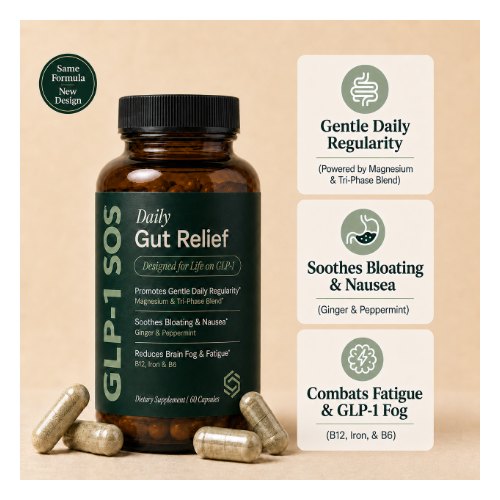
GLP-1 SOS Daily Gut Relief
A two-capsule evening supplement of magnesium, ginger, peppermint and a 19-species probiotic blend, sold for constipation and nausea on GLP-1 medicines.
- Format
- Capsule, once a day
- Type
- Magnesium, herbal and probiotic
- Cost
- $1.63 a day
- Customer rating
- 3.9 out of 5 from 623 ratings from Amazon
What customers consistently report
- Gentler, more regular bowel movements within days
- Less bloating and fewer sulfur burps
- A simple two-capsule routine with dinner
Those are the themes that recur across the reviews. Low review confidence — the brand’s own page shows 4.53 from 1,570 reviews in a widget while its copy claims 4.8 from 55,000-plus, Amazon shows 3.9 from 623 ratings with the text behind a sign-in, and Trustpilot shows 2.2 from 29 reviews, 80% of them one-star.
Why it might work
Magnesium citrate and oxide draw water into the bowel and soften stool; this is the osmotic action used by magnesium laxatives. Ginger extract has sped up stomach emptying in small studies and has been used for nausea, and the label’s 200 mg is a fraction of the doses in those trials. The probiotic blend is meant to add gut bacteria, though benefit in constipation trials has depended on the specific strain. The remaining vitamins, minerals and ashwagandha target tiredness rather than the gut. The label cannot show whether these amounts do anything for the slowed digestion that GLP-1 medicines cause, and the brand’s claim that fiber worsens GLP-1 constipation differs from consensus guidance that advises adequate fiber and water.
What the research supports
No trial of this product was found, and none of its ingredients has been tested in people taking semaglutide or tirzepatide. For constipation, a small placebo-controlled trial of 1.5 g a day of magnesium oxide (about 900 mg of magnesium) in 34 women helped, and guidelines give magnesium oxide a conditional recommendation; the label has 250 mg of magnesium from two forms. Ginger has quickened stomach emptying in studies at 1,200 mg of powder and helped nausea in chemotherapy and pregnancy trials at higher gingerol doses than the label’s roughly 10 mg, and meta-analyses of probiotics for constipation find benefit for specific strains such as B. lactis but not for unspecified mixtures like this one.
What the label discloses
The label prints every amount, but the probiotic is a 50 mg blend of 19 named species with no strain designations at about 5 billion CFU a serving, and the magnesium split between citrate and oxide is not given. Third-party testing and a cGMP facility are claimed, without a named laboratory, manufacturer or certificate, and no company name appears on the site. The label says the facility also processes milk, soy, eggs, tree nuts, peanuts, wheat, sesame, fish and shellfish, while Amazon’s bullets say free from them.
Who this tends to suit
We match this product to people reporting constipation, irregular bowel habits, bloating and nausea. It fits someone whose priority is regularity or day-to-day comfort. Whether it is the best fit for you depends on the rest of your answers — what you have already tried, what format you will take, and anything that has to be ruled out.
Where it may not fit
We hold no dietary claims on file for this product, so we do not assume any. We flag this product for anyone pregnant or breastfeeding or taking prescription medication, and the quiz removes it rather than recommending it in those cases. That is a caution about who should be deciding, not a claim about the product. A capsule only works if you will take it once a day, every day.
Side effects and what to be aware of
Trustpilot reviews (2.2 from 29) are mostly complaints about refunds, subscriptions that are hard to stop and slow support, and Amazon reviewers split between very helpful and not effective. The refund policy covers only the first bottle, only between day 30 and day 60, and only if the subscription is cancelled before the second shipment. The label prints no warnings; magnesium above 350 mg a day from supplements can cause diarrhea and cramps, and this label has 250 mg. The product page loads with a three-bottle subscription selected.
Common questions
Does GLP-1 SOS Gut Relief work for constipation and nausea on Ozempic or Mounjaro?
No trial of this product, or of any of its ingredients in people on semaglutide or tirzepatide, was found. Magnesium oxide at about 900 mg of magnesium helped constipation in a small placebo-controlled trial (the label has 250 mg), and ginger has helped nausea in other groups at higher doses than the label’s. Amazon reviewers are split (3.9 from 623) and Trustpilot shows 2.2 from 29.
Is GLP-1 SOS safe, and what are the side effects?
The label prints no warnings, and the company says to tell a doctor about supplements you take. Magnesium from supplements can cause diarrhea, nausea and cramps above 350 mg a day, and the label has 250 mg; it also contains 9 mg iron, 500 mcg B12, 2,500 mcg biotin, ashwagandha and 5 mg piperine. Anyone on a GLP-1 medicine with severe or lasting constipation or nausea is told by consensus guidance to inform their clinician.
What is in GLP-1 SOS Gut Relief?
Two capsules contain 250 mg magnesium (citrate and oxide), 200 mg ginger extract (5% gingerols), 50 mg peppermint extract, 50 mg ashwagandha, a 50 mg blend of 19 named probiotic species (about 5 billion CFU), 10 mg digestive enzymes, 5 mg black pepper extract, and vitamins B6, B12, D, folate, biotin, iron and zinc. No strain designations are printed.
How much does GLP-1 SOS cost?
One bottle (30 days) is $49.99 one time, about $1.67 a day, or $39.99 a month on subscription ($1.33 a day). The product page loads with a subscription and a three-bottle bundle ($79.98, shipped every three months) selected. Amazon lists $48.99, about $1.63 a day.
What is the GLP-1 SOS refund policy?
The company is not named on its site. The refund policy covers the first bottle only, requests must be made between day 30 and day 60 after delivery, the subscription must be cancelled before the second shipment, and renewals are not refundable; cancellation is online only. Trustpilot shows 2.2 from 29 reviews, with refund denials, hard-to-stop subscriptions and slow support as the main complaints.
GLP-1 SOS vs MiraLAX or fiber?
Polyethylene glycol (the ingredient in MiraLAX) carries a strong guideline recommendation for chronic constipation, magnesium oxide and fiber a conditional one; no study compares them in people on GLP-1 medicines. The brand says fiber can worsen GLP-1 constipation, while expert guidance for these drugs advises water, activity and adequate fiber.
Before you take this. Speak to a doctor or pharmacist first if you are pregnant or breastfeeding, or taking prescription medication. Nothing on this page is medical advice, and no supplement diagnoses, treats, cures or prevents disease.
Is this the right one for you?
The quiz works out which of the products we have researched fits your symptoms, your routine and what you have already tried — and tells you plainly if none of them do.
Take the quiz →Free. Private. Nothing to sign up for.
Others we researched for the same job
These sit in the same role as GLP-1 SOS Daily Gut Relief — stool form and regularity — so they are the sensible things to weigh it against.
See all the products we have researched →
Related reading
Background on how this type of product works, read from the trial evidence.