Daily gut routine
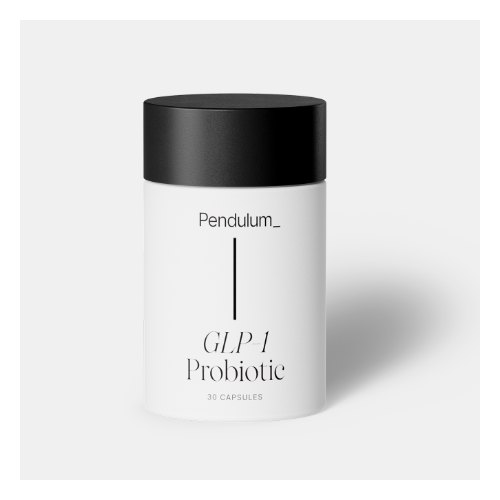
Pendulum GLP-1 Probiotic
A once-a-day capsule of Akkermansia, Clostridium butyricum and Bifidobacterium infantis with chicory inulin, sold for cravings and appetite, with a line on gas and bloating.
- Format
- Capsule, once a day
- Type
- Probiotic and prebiotic
- Cost
- $2.50 a day
- Customer rating
- 4.5 out of 5 from 247 ratings from iHerb
Not sure it suits your symptoms? The quiz matches one product to you in one to three minutes.
The themes in the reviews
- Fewer cravings and less snacking for those it suits
- Less bloating and more regular digestion
- One capsule a day with food
Those are the themes that recur across the reviews. Moderate review confidence — iHerb shows 4.5 from 247 ratings, while the brand’s own Junip widget shows 3.37 from 1,323 with 316 one-star reviews, and the company’s Trustpilot score is 3.7 from 83.
Why it might work
GLP-1 is a gut hormone released by L-cells in the intestine after meals; it slows stomach emptying and signals fullness. In mice, Akkermansia releases a protein called P9 that triggers GLP-1 release, and the brand says its Clostridium and Bifidobacterium strains make butyrate, propionate and acetate, short-chain fatty acids that act on the same cells. Chicory inulin is a fermentable fiber that feeds bifidobacteria. A delayed-release capsule is meant to carry the bacteria past stomach acid. The label does not give per-strain counts, and no human study of this capsule has measured GLP-1 yet.
What the trials show
No published trial has tested this three-strain capsule: Pendulum’s registered safety trial of the formula in 30 adults is still running with no results, and the 91% cravings figure comes from a six-week consumer survey of 274 buyers with no comparison group. Its three organisms were part of WBF-011, a five-strain Pendulum formula that lowered after-meal glucose against placebo over 12 weeks in 76 adults with type 2 diabetes at six capsules a day, without changing body weight; GLP-1 was not measured. The trial arm without Akkermansia did not beat placebo, and the brand marks its GLP-1 claims as based on preclinical studies.
What the label discloses
The panel lists a 500 million AFU blend of Clostridium butyricum WB-STR-0006, Akkermansia muciniphila WB-STR-0001 and Bifidobacterium infantis with no strain code (the trial registration names Bi-26), without per-strain counts, plus chicory inulin. Panels differ by seller: the brand’s current image shows 211 mg of inulin and no L-leucine, while iHerb and the trial registration show 174 mg with L-leucine. No third-party test is stated on the product page.
Where it may not fit
The label supports no added sweeteners. It carries a flag for people pregnant or breastfeeding or taking prescription medication. That points to the person who should make the call, not to a fault in the product. Like any capsule, it depends on being taken once a day, every day.
Reactions and warnings
Many reviewers report no change in appetite or weight after one to three months, and some describe constipation or early gas and bloating, which the brand says usually settle within 14 days. Complaints also center on membership cancellations, repeat charges and shipping. The label asks anyone pregnant, nursing or on medication to check with a healthcare provider first, and the brand page opens with a three-month membership selected.
The questions that come up
Does Pendulum GLP-1 Probiotic work?
No published trial has tested this capsule. Its three strains were part of a five-strain Pendulum formula that improved after-meal glucose in 76 adults with type 2 diabetes at six capsules a day, without weight change and without measuring GLP-1. The cravings figures come from a brand survey of 274 buyers, and a registered safety trial of the capsule has no results yet.
What are the ingredients in Pendulum GLP-1 Probiotic?
One capsule holds a 500 million AFU blend of Clostridium butyricum WB-STR-0006, Akkermansia muciniphila WB-STR-0001 and Bifidobacterium infantis, plus chicory inulin (211 mg on the brand’s current panel, 174 mg on iHerb’s). The rest is microcrystalline cellulose, a hypromellose capsule and silica, with L-leucine on the older label.
What are the side effects of Pendulum GLP-1 Probiotic?
The brand lists increased gas, bloating, nausea or loose stools that usually settle within 14 days. In the diabetes trial of the related five-strain formula, mild nausea and loose stools appeared in the first 3 to 5 days. Some reviewers report constipation, and the label asks pregnant or nursing people and anyone on medication to check with a healthcare provider.
Does Pendulum GLP-1 Probiotic contain GLP-1, and is it like Ozempic?
No. The brand says it “does not contain GLP-1 and is not a GLP-1 agonist drug”, that its GLP-1 claims are based on preclinical studies, and that it is “Not intended for weight loss”. It is a probiotic meant to support the body’s own GLP-1 release.
What do Pendulum reviews and complaints say?
iHerb shows 4.5 from 247 ratings; the brand’s own widget shows 3.37 from 1,323, with 316 one-star reviews. Praise centers on fewer cravings and less bloating; complaints are no change after months, membership cancellations and repeat charges. Company-wide, Trustpilot shows 3.7 from 83 reviews.
Before you take this. Speak to a doctor or pharmacist first if you are pregnant or breastfeeding, or taking prescription medication. GLP-1 Probiotic is a supplement, not a medicine, and this page is information rather than advice.
Is GLP-1 Probiotic the one, or is something else?
The quiz weighs your symptoms and routine and names one match, which may or may not be GLP-1 Probiotic.
Take the quiz →Free, private, and it names one product.
Alternatives in the same role
These sit in the same role as Pendulum GLP-1 Probiotic — daily gut routine — so they are the sensible things to weigh it against.
See all the products we have researched →
Background reading
Where the numbers on this page come from, explained at length.