Daily gut routine
Seneca Microbiome Balance Formula
A two-capsule daily formula of seven named probiotic strains with sodium butyrate, berberine and aloe gel, sold for regularity, bloating and microbiome balance.
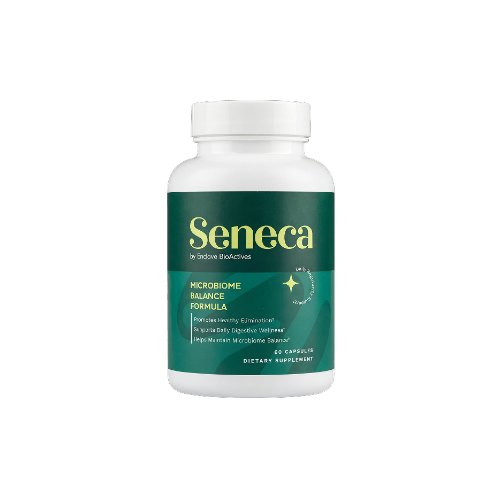
- Format
- Capsule, once a day
- Type
- Probiotic, postbiotic and herbal
- Cost
- $1.97 a day
- Customer rating
- 2.9 out of 5 from 7 ratings from tryseneca.com
Not sure it suits your symptoms? The quiz matches one product to you in one to three minutes.
What the accounts we could find say
- Relief after other products had not helped
- A calmer, quieter stomach within weeks
- Steadier bowel habits for some after about six weeks
There is not enough independent feedback here to call those themes reliable. Low review confidence — the 2.9 from 7 reviews is the brand’s own Loox feed (the page header shows a typed 5.0), there is no Trustpilot profile for the product, the company’s Trustpilot is 2.9 from 70 across all its products, and Amazon listings under the Seneca name are from other sellers.
Why it might work
The brand calls the probiotic blend a “Butyrogen Complex” built around butyrate-producing strains and adds sodium butyrate directly, which it says is microencapsulated to reach the colon. Butyrate is the main fuel of colon lining cells; the seven organisms on the label are not themselves butyrate producers, though bifidobacteria can feed the bacteria that are. Berberine is a plant alkaloid that changes gut bacteria and slowed diarrhea in an IBS-D trial at a higher dose. Aloe gel is said to soothe the lining. The label cannot show whether the butyrate coating works or how many live organisms remain by expiry.
What the trials show
No trial of this capsule was found. Its lead strain, B. lactis HN019, shortened gut transit in a 14-day trial of 100 adults but showed no benefit over placebo in two later constipation trials of 228 and 224 adults, and the label does not say how much of the 20.5 billion CFU is HN019. The berberine is 150 mg against 400 mg a day in the IBS-D trial, and the sodium butyrate (350 mg) is near the 300 mg used as an add-on in one 66-patient IBS trial. The other named strains have no gut-symptom trials that we found.
What the label discloses
The panel names all seven strains with their codes and gives a percentage for each, but not whether the shares are by count or weight, and the CFU is guaranteed only at manufacture. The brand says batches are made and tested in an FDA-registered, GMP-certified US facility without naming a lab. No allergen or free-from statement is printed.
Read more on the plants in the formula.



Who this tends to suit
In the quiz it comes up for people who describe bloating, constipation, loose stools, alternating constipation and loose stools, irregular bowel habits and symptoms that follow particular foods. It is scored for a goal of regularity, day-to-day comfort or a steady daily routine. Whether it is the best fit for you depends on the rest of your answers — what you have already tried, what format you will take, and anything that has to be ruled out.
Where it may not fit
The label supports no added sweeteners. If you are pregnant or breastfeeding or taking prescription medication, expect Microbiome Balance Formula to be missing from your results on purpose; that decision is routed to a clinician, not made here. Like any capsule, it depends on being taken once a day, every day.
Reactions and warnings
Seven Loox reviews split between relief and no effect, with one “It made me sick”. Berberine can raise cyclosporin and tacrolimus levels and change how other medicines are cleared, and is not advised in pregnancy or breastfeeding; the parent store’s FAQ asks anyone with a medical condition, on medication, pregnant or nursing to consult a provider first. The sales pages’ FAQ also says it can help with weight, while the parent store says it is not formulated as a weight-loss product.
The questions that come up
Does Seneca work?
No trial of Seneca was found. Its lead strain, B. lactis HN019, shortened gut transit in a 14-day trial but did not beat placebo in two later constipation trials, and its berberine is 150 mg against 400 mg in the IBS-D trial. The brand’s own review app shows 2.9 from 7 reviews.
What are the ingredients in Seneca?
Two capsules hold sodium butyrate 350 mg, berberine 150 mg, a 20.5 billion CFU blend of seven named strains (102.5 mg), aloe gel extract 50 mg, L-glutamine 75 mg, vitamin D3 50 mcg and aged garlic extract 250 mcg. The CFU is counted at manufacture.
What do Seneca reviews and complaints say?
The brand’s Loox feed shows 2.9 from 7 reviews, with complaints of no effect and one of feeling sick. The company’s Trustpilot page, which covers all its products, is 2.9 from 70 with billing complaints, and the BBB rates Enclave, LLC “B” with 23 complaints in three years.
Is Seneca sold on Amazon?
The brand says it sells only on its own sites and that listings elsewhere are not authorized. Amazon listings under the Seneca name come from other sellers, and one of them lists a different formula.
What is Seneca’s refund policy?
The brand offers 90 days. A single bottle needs no return, limited to one refund per product per year; multipacks refund the first opened bottle plus any unopened bottles sent back, less shipping and handling.
A word before buying. Anyone pregnant or breastfeeding, or taking prescription medication should run Microbiome Balance Formula past a doctor or pharmacist. What is written here is research, not medical advice.
Is Microbiome Balance Formula the one, or is something else?
The quiz weighs your symptoms and routine and names one match, which may or may not be Microbiome Balance Formula.
Take the quiz →Free, private, and it names one product.
Alternatives in the same role
If Seneca Microbiome Balance Formula is on your list, these belong on it too; each is researched for the same job, daily gut routine.
See all the products we have researched →
Background reading
Where the numbers on this page come from, explained at length.