
Discomfort and cramping
The Loose Leaf Happy Intestine Tea
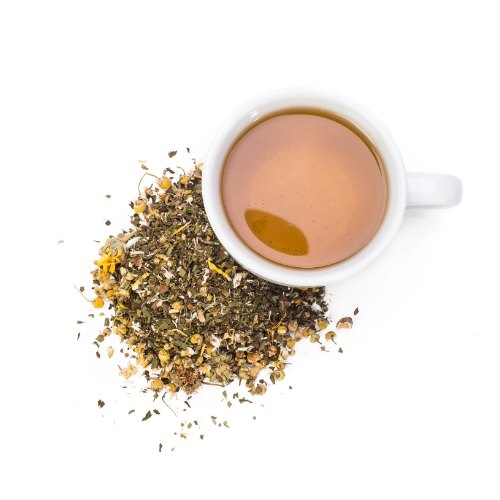
A caffeine-free loose-leaf blend of peppermint, chamomile, marshmallow root and calendula, marketed for bloating, gas, cramping and IBS.
- Format
- Tea
- Type
- Herbal
- Cost
- $0.36 a day
- Customer rating
- 4.65 out of 5 from 417 ratings from thelooseleaftea.com
What customers consistently report
- A peppermint and chamomile taste that needs no sweetener
- A calmer gut and fewer IBS or colitis flare-ups after a few weeks
- Less bloating and gas after meals
Those are the themes that recur across the reviews. Low review confidence — the 4.65 from 417 reviews sits in the brand’s own store widget with no verified-buyer flag, only 165 of them could be read, there is no Trustpilot profile, and no independent retailer rating exists for this tea.
Why it might work
The brand and its ads describe peppermint as calming spasms and bloating, chamomile as soothing inflammation, marshmallow root as coating the intestinal lining, and calendula as helping repair tissue. In the EU monographs these are long-standing traditional uses for mild complaints, not mechanisms shown in people, and calendula’s recognized uses are not gut-related. Peppermint relaxes smooth muscle in laboratory and oil-capsule studies, and the EU leaf monograph warns that it can worsen heartburn. Marshmallow root’s mucilage is a gel-forming fiber that may slow the absorption of other medicines. The label gives no amounts, so none of this can be tied to a dose.
What the research supports
No trial of this blend was found. The IBS evidence for peppermint is for peppermint oil, not leaf: a meta-analysis of 10 trials in 1,030 people found the oil improved global symptoms (relative risk of not improving 0.65) with more side effects, on very low quality evidence. Peppermint leaf, chamomile and marshmallow root each hold EU traditional-use status for mild digestive complaints at 1.5 to 5 g per cup, which is more than the roughly 1 g of blend per serving that the label’s servings count implies, and calendula’s EU indications are for skin and mouth only. No herbal tea trial in Crohn’s disease or colitis was found.
What the label discloses
Four herbs are named with no amounts, and the product page has no label panel, warning, testing or certification statement; the brand’s story page says its ingredients are Fair Trade certified while its FAQ says the company is not yet certified organic. The brand’s own count of 50 servings in 1.8 oz implies about 1 g of blend per serving, against a brewing instruction of 1 to 2 teaspoons.
Who this tends to suit
We match this product to people reporting bloating, gas, cramping, abdominal pain and general abdominal discomfort. It fits someone whose priority is day-to-day comfort or pain and tenderness. Whether it is the best fit for you depends on the rest of your answers — what you have already tried, what format you will take, and anything that has to be ruled out.
Where it may not fit
We hold no dietary claims on file for this product, so we do not assume any. We flag this product for anyone pregnant or breastfeeding or taking prescription medication, and the quiz removes it rather than recommending it in those cases. That is a caution about who should be deciding, not a claim about the product. A tea only works if you will take it as often as the label directs.
Side effects and what to be aware of
Reviews on the brand’s own site are mostly positive; the complaints are orders not received or slow replies, a weak or unpleasant taste, fine particles passing through strainers, and a few reports of nausea, bloating or diarrhea after a cup. The EU monographs advise people with reflux to avoid peppermint leaf, list allergy to the daisy family as a contraindication for chamomile and calendula, and do not recommend these herbs in pregnancy; the product page itself carries no warning. Opened tea cannot be returned.
Common questions
Does Happy Intestine Tea work for IBS?
No trial of this tea was found, and the brand’s wording that it is created for anyone with IBS or Crohn’s disease is not backed by a trial in the sources read. The IBS evidence for peppermint is for peppermint oil capsules, not leaf tea, and is rated very low quality. On the brand’s own site the 4.65 average from 417 reviews includes many reviewers describing fewer IBS and colitis symptoms after a few weeks, and a few reporting no help or stomach upset.
Is Happy Intestine Tea safe, and what are the side effects?
The product page carries no warning. The EU monographs for its herbs advise people with heartburn to avoid peppermint leaf, list allergy to the daisy family (Asteraceae) as a contraindication for chamomile and calendula, and do not recommend them in pregnancy or breastfeeding. Reviewers report nausea, bloating, constipation or diarrhea after a cup, and marshmallow root may delay the absorption of medicines taken at the same time.
What is in Happy Intestine Tea, and how do you make it?
Organic peppermint, chamomile, marshmallow root and calendula, caffeine-free and loose leaf (no tea bags). The brand’s FAQ says 1 to 2 teaspoons per 8 oz of boiling water steeped 5 to 10 minutes, and up to 24 oz a day for what it calls full support or 8 oz for maintenance; no amount per herb is printed.
How much does Happy Intestine Tea cost?
A 1.8 oz bag of 50 servings is $18.00, or $0.36 a cup and $1.08 a day at the brand’s three cups; subscribing is from $16.20 every one or two months, and a 1 lb bulk bag is $105. Shipping is extra and the rate is not published. A spa boutique lists a tea with the same ingredients at $26.00.
Who makes Happy Intestine Tea, and can I return it?
The Loose Leaf is an Oceanside, California business founded in 2008 whose story page says the founder trained as a herbalist at a naturopathy institute in Encinitas, though it gives no name. Unopened tea can be returned within 30 days at the buyer’s expense and opened tea cannot be returned. Three of the 165 reviews read are one-star reports of orders not received, and one reviewer says emails and calls went unanswered; no Trustpilot profile exists.
Before you take this. Speak to a doctor or pharmacist first if you are pregnant or breastfeeding, or taking prescription medication. Nothing on this page is medical advice, and no supplement diagnoses, treats, cures or prevents disease.
Is this the right one for you?
The quiz works out which of the products we have researched fits your symptoms, your routine and what you have already tried — and tells you plainly if none of them do.
Take the quiz →Free. Private. Nothing to sign up for.
Others we researched for the same job
These sit in the same role as The Loose Leaf Happy Intestine Tea — discomfort and cramping — so they are the sensible things to weigh it against.
See all the products we have researched →
Related reading
Background on how this type of product works, read from the trial evidence.