Discomfort and cramping
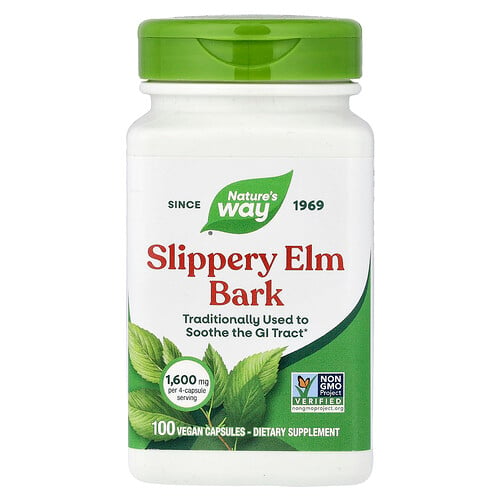
Nature’s Way Slippery Elm Bark Capsules
A mucilage-rich bark used for centuries to coat an irritated stomach and throat, with almost no trial evidence and a great deal of use.
- Format
- Capsule, once a day
- Type
- Herbal
- Cost
- $0.34 a day
- Customer rating
- 4.7 out of 5 from 55 ratings from naturesway.com
Not sure it suits your symptoms? The quiz matches one product to you in one to three minutes.
The few accounts on record
- A soothed stomach during gastritis or reflux flare-ups
- Less bloating and more regular bowel movements
- Easy-to-swallow vegan capsules with no aftertaste
There is not enough independent feedback here to call those themes reliable. Low review confidence — 4.7 from 55 reviews on the brand’s own store (naturesway.com).
The mechanism, as the brand describes it
Slippery elm bark is rich in mucilage, a gel-forming polysaccharide that swells in water and coats the surfaces it touches. In the throat and stomach that coating is thought to protect irritated lining from acid and to stimulate mucus secretion, which is the whole of the mechanism and the reason it is used for reflux, gastritis and sore throats alike. The same coating can slow the absorption of medicines taken at the same time.
What has actually been tested
Traditional use with very little trial data. A 2010 open-label pilot study gave 31 people with IBS one of two herbal formulations containing slippery elm bark: the constipation-type formula improved bowel habit and symptoms, the other improved some symptoms without changing bowel habit. There was no placebo and slippery elm was one ingredient among several. No controlled trial of slippery elm alone for any gut symptom was found.
What the panel prints, and what it leaves out
Four capsules supply 1,600 mg of slippery elm bark (Ulmus rubra) with a vegan capsule; Non-GMO Project verified, vegan and gluten-free are stated. The label carries the medication-spacing warning. No third-party testing certificate is published.
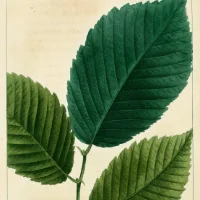
Herb entries for what is in it.
When it makes sense
The symptoms it is scored against are general abdominal discomfort, heartburn or reflux and abdominal pain. It fits someone whose priority is day-to-day comfort or pain and tenderness. Which product the quiz lands on also turns on what you have already tried, the format you prefer, and any exclusions that apply to you.
Where it falls short of the brief
The dietary claims the label makes are vegan, gluten-free, dairy-free, no added sweeteners and minimal ingredient list. One group does not see Slippery Elm Bark Capsules in their results: people pregnant or breastfeeding or taking prescription medication. The product is not the problem; the person who should decide is. It is a capsule taken once a day, every day, and the quiz asks whether that is a routine you will keep.
Side effects and what to be aware of
The label says not to take it with any medication, because the mucilage can slow absorption of other things; leave two hours either side. The evidence is one open-label pilot of a mixture that contained slippery elm, not a trial of slippery elm alone, and the capsules are large. It is a soothing agent, not a treatment for whatever is causing the soreness.
One check first. Nature’s Way sells a supplement, not a treatment, and if you are pregnant or breastfeeding, or taking prescription medication the decision belongs with a doctor or pharmacist, not with this page.
Would the quiz pick this for you?
Tell the quiz your symptoms, what you have tried and any medicines you take; it ranks Slippery Elm Bark Capsules against the rest and shows its reasons.
Take the quiz →Free. Private. Nothing to sign up for.
Its peers in the catalog
If Nature’s Way Slippery Elm Bark Capsules is on your list, these belong on it too; each is researched for the same job, discomfort and cramping.
See all the products we have researched →
Further reading
The guides behind the category, written from the trials rather than the labels.