Discomfort and cramping
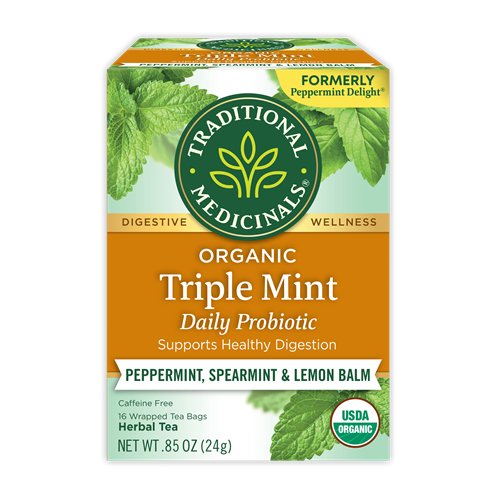
Traditional Medicinals Organic Triple Mint Daily Probiotic Tea
A peppermint, spearmint and lemon balm tea with a Bacillus coagulans probiotic added, with no amounts printed for any ingredient and no trial of the tea.
- Format
- Tea
- Type
- Herbal and probiotic
- Cost
- $0.44 per cup on iHerb, $0.37 on Amazon; the brand directs up to three cups a day
- Customer rating
- 4.8 out of 5 from 1,976 ratings from Amazon
What the reviews repeat
- A strong, clean mint flavor that is not bitter
- A calming after-dinner or evening cup
- An upset stomach settling
Those are the themes that recur across the reviews. High review confidence — 4.8 from 1,976 Amazon ratings on the 16-bag listing sold by Amazon.com, with iHerb at 4.7 from 1,273; the brand’s own 4.80 from 61 reviews includes 38 collected through a free sample program.
What the ingredients do, in theory
Peppermint, spearmint and lemon balm are mint-family herbs whose oils, menthol and carvone in the mints, relax gut smooth muscle in laboratory studies, and lemon balm has a calming reputation that the label echoes with a drowsiness warning. The probiotic is a spore-former, a hardy form that tolerates heat and stomach acid better than most probiotics, which is why it is used in teas and baked goods. Nothing on the label shows how many spores are in a bag, how many survive boiling water, or whether the strain is one of those tested in trials. Any effect on bloating would rest on the herbs’ traditional use and an unmeasured probiotic dose.
Reading the label
Four ingredients are listed in order, lemon balm, peppermint, spearmint and Bacillus coagulans, with no amount for any of them and no CFU, so a bag’s herb content and probiotic dose cannot be checked. An older grocery listing footnotes the organism as LactoSpore, but the brand’s current page does not. The brand states USDA and CCOF organic and kosher status, with no testing laboratory named, and asks for a 10 minute covered steep.
Each herb on the label has its own page: Peppermint, Spearmint, Lemon balm. The pages cover traditional use, trials, doses and interactions.
What the research supports
Nothing has tested this tea, and the label gives no CFU or strain for its Bacillus coagulans, so the probiotic evidence cannot be tied to it. Trials of named Bacillus coagulans strains at about 2 billion CFU a day in capsules found less bloating and abdominal pain in IBS and in adults with gas and bloating (70 adults, 4 weeks), but some were run by the strain owners. For the herbs, peppermint oil beat placebo in a 10-trial IBS review, a reviewer of peppermint tea found no clinical trials of it, and one 32-person pilot of a lemon balm, spearmint and coriander extract eased pain and bloating.
The people it is built for
The quiz pairs it with answers that mention general abdominal discomfort. Someone whose aim is day-to-day comfort or a steady daily routine is who it is matched to. It is still only a candidate until your other answers are in: previous products, the format you will take, and the things that have to be excluded.
When to look elsewhere
Its packaging states vegan, no added sweeteners and minimal ingredient list. Organic Triple Mint Daily Probiotic Tea is held back from the results of anyone pregnant or breastfeeding; a prescriber should weigh it for them, which is a statement about the decision rather than the product. The format matters too: a tea asks you to take it as often as the label directs.
What to watch for
A few reviewers say they felt no difference or could not tell the probiotic was there, and one asks for the dose per bag. The label asks users to consult a practitioner if they are pregnant or breastfeeding, immune-compromised, or have gallstones, bile duct obstruction, hiatal hernia or acid reflux, and says it may cause drowsiness.
What people want to know
Does Traditional Medicinals Triple Mint probiotic tea work?
No trial of this tea exists, and the label gives no probiotic count or strain. Amazon reviewers rate it 4.8 from 1,976 ratings, mostly for a clean mint flavor and a settled stomach; a few say they noticed nothing from the probiotic.
What is in Triple Mint Daily Probiotic tea?
Organic lemon balm leaf, organic peppermint leaf, organic spearmint leaf and Bacillus coagulans, in that order, with no caffeine or sweetener. The label prints no amount for any ingredient and no CFU for the probiotic.
How much does Triple Mint tea cost per cup?
A 16-bag box is $5.88 on Amazon.com, about $0.37 a cup, $6.99 on iHerb, about $0.44, and $7.49 on the brand’s store, about $0.47. The brand’s multi-packs work out to about $0.44.
Is Triple Mint probiotic tea safe, and what are the side effects?
The label says to consult a practitioner if you are pregnant or breastfeeding, immune-compromised, or have gallstones, bile duct obstruction, hiatal hernia or acid reflux, and that it may cause drowsiness. No pattern of side effects appears in the reviews read.
Triple Mint tea vs peppermint tea?
Triple Mint adds spearmint, lemon balm and a Bacillus coagulans probiotic to peppermint, with no amounts printed, while peppermint tea is one herb. Neither has a trial as a tea, and the probiotic’s dose in this tea is not stated.
Who should ask first. People who are pregnant or breastfeeding: a doctor or pharmacist should see Organic Triple Mint Daily Probiotic Tea before you do. No supplement diagnoses, treats, cures or prevents disease.
Does it fit your routine?
The quiz takes about three minutes and tells you whether Organic Triple Mint Daily Probiotic Tea is the right call for your symptoms, your medicines and your routine.
Take the quiz →No sign-up, no email, about three minutes.
What else does this job
Discomfort and cramping: that is the job Traditional Medicinals Organic Triple Mint Daily Probiotic Tea does, and these are the other entries doing it.
See all the products we have researched →
Guides that explain the category
Background on how this type of product works, read from the trial evidence.