Discomfort and cramping
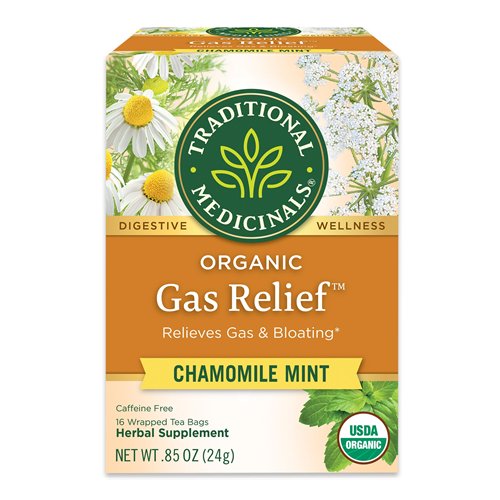
Traditional Medicinals Organic Gas Relief Tea
A five-herb caraway, coriander, chamomile, lemon balm and peppermint tea for gas and bloating, with 300 mg of each herb a bag and no trial of the tea itself.
- Format
- Tea
- Type
- Herbal
- Cost
- $0.44 per cup on Amazon and iHerb; the brand directs one to four cups a day
- Customer rating
- 4.5 out of 5 from 1,766 ratings from Amazon
What the reviews repeat
- Gas and bloating easing within a cup or so
- A mild, slightly sweet chamomile-and-mint flavor
- A soothing cup after meals
Those are the themes that recur across the reviews. Moderate review confidence — 4.5 from 1,766 Amazon ratings on the 16-bag listing, with iHerb at 4.6 from 4,653 and 4.79 from 28 reviews on the brand’s own page.
What the ingredients do, in theory
Caraway, coriander, chamomile, lemon balm and peppermint are all traditional carminatives, herbs used to ease gas and cramping, and several contain volatile oils (carvone, menthol, bisabolol) that relax gut smooth muscle in laboratory studies. A steeped bag releases a small, unmeasured share of those oils, and covering the cup keeps more of them in the water. Chamomile and lemon balm also have a calming reputation, which matters for symptoms that worsen with tension. The five herbs and their milligrams can be checked on the panel; how much oil ends up in the cup cannot, and the trials used concentrated forms.
Reading the label
The panel prints five organic herbs at 300 mg each per bag (1,500 mg), with no proprietary blend, sweetener or added flavor, and the ingredient order matches the amounts. The brand states USDA and CCOF organic, Non-GMO and kosher status, but publishes no testing laboratory or certificate. The label asks for a 10 to 15 minute covered steep and warns anyone allergic to the parsley or daisy plant families.
Each herb on the label has its own page: Caraway, Chamomile, Lemon balm, Peppermint. The pages cover traditional use, trials, doses and interactions.
What the research supports
We found no trial of this tea. The evidence for its herbs is in extracts and oils: peppermint oil beat placebo in a 10-trial IBS meta-analysis (1,030 patients), a peppermint and caraway oil combination reduced pain in functional dyspepsia (3 trials, 249 patients), and a lemon balm, spearmint and coriander extract eased pain and bloating in a 32-person IBS pilot. A reviewer of peppermint tea found no clinical trials of it, and no adult gut trial of chamomile turned up. A bag holds 300 mg of each herb, far from those extract doses.
The people it is built for
In the quiz it comes up for people who describe bloating, gas and general abdominal discomfort. Someone whose aim is day-to-day comfort or handling meals is who it is matched to. It is still only a candidate until your other answers are in: previous products, the format you will take, and the things that have to be excluded.
When to look elsewhere
Its packaging states vegan, gluten-free, dairy-free, no added sweeteners and minimal ingredient list. Organic Gas Relief Tea is held back from the results of anyone pregnant or breastfeeding; a prescriber should weigh it for them, which is a statement about the decision rather than the product. The format matters too: a tea asks you to take it as often as the label directs.
What to watch for
A minority of reviewers say it did nothing for them, and some find 16 bags at the price a stretch for daily use. The label asks users to consult a practitioner with gallstones, acute abdominal pain, hiatal hernia or acid reflux, or if pregnant or breastfeeding, and not to use it with an allergy to parsley-family or daisy-family plants.
What people want to know
Does Traditional Medicinals Gas Relief tea work?
No trial of this tea exists. Reviewers on Amazon and the brand’s site mostly say it eases gas and bloating within a cup or two (4.5 from 1,766 Amazon ratings), and a minority say it did nothing. The research on its herbs is in extracts and oils, not tea bags.
What is in Gas Relief tea?
Five organic herbs at 300 mg each per bag: caraway fruit, coriander fruit, chamomile flower, lemon balm leaf and peppermint leaf, 1,500 mg in total. There is no caffeine, sweetener or added flavor, and no laxative herb such as senna.
How much does Gas Relief tea cost per cup?
A 16-bag box is $7.49 on the brand’s store, about $0.47 a cup, and $6.99 on iHerb, about $0.44. Multi-packs on the brand’s site and Amazon work out to about $0.44 a cup.
Is Gas Relief tea safe, and does it have side effects?
The label asks you to consult a practitioner if you have gallstones, acute abdominal pain, hiatal hernia or acid reflux, or if you are pregnant or breastfeeding, and not to use it with an allergy to parsley-family or daisy-family plants. No side-effect pattern shows in the reviews read; the negative taste mentions on Amazon are mostly about flavor.
Gas Relief tea vs peppermint tea for bloating?
Gas Relief adds caraway, coriander, chamomile and lemon balm to peppermint at 300 mg each, while peppermint tea is one herb. Neither has a trial as a tea; one brand-site reviewer switched back to peppermint because Gas Relief did not work for them.
If you are pregnant or breastfeeding. Ask a doctor or pharmacist before Organic Gas Relief Tea; this page describes the product and the evidence, it does not prescribe.
Does it fit your routine?
The quiz takes about three minutes and tells you whether Organic Gas Relief Tea is the right call for your symptoms, your medicines and your routine.
Take the quiz →No sign-up, no email, about three minutes.
What else does this job
If Traditional Medicinals Organic Gas Relief Tea is on your list, these belong on it too; each is researched for the same job, discomfort and cramping.
See all the products we have researched →
Guides that explain the category
Background on how this type of product works, read from the trial evidence.