
Taken with meals
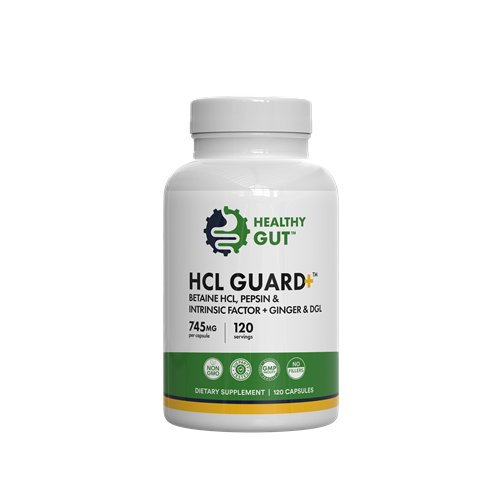
Healthy Gut HCL Guard (Betaine HCl with Pepsin)
A betaine HCl and pepsin capsule taken at protein meals, with ginger, DGL and intrinsic factor added and a brand-set dose ladder of 1 to 6 capsules.
- Format
- Capsule
- Type
- Digestive enzyme, DGL licorice (mucosal protectant) and herbal
- Cost
- $0.20 per capsule; the brand says most people take 2 to 6 with each protein meal
- Customer rating
- 4.2 out of 5 from 118 ratings from Amazon
What customers consistently report
- Less bloating and heaviness after protein-heavy meals
- A one-capsule-at-a-time ladder for finding a dose
- Ginger and DGL added to the acid capsule
Those are the themes that recur across the reviews. Low review confidence — the 4.2 from 118 Amazon ratings is independent but the listing is a few months old and its text could not be read, the brand’s Trustpilot profile (4.5 from 23) and store score are brand-wide, and the store’s review feed shows one HCL Guard review.
Why it might work
Betaine hydrochloride releases hydrochloric acid when it dissolves, so a capsule can lower the pH in the stomach for a short time, which is the effect measured in volunteers. Pepsin is a protein-cutting enzyme that works only in strong acid, so it is paired with the acid. Ginger is studied for speeding stomach emptying, deglycyrrhizinated licorice is a licorice extract with the glycyrrhizin removed and is studied for stomach discomfort, and intrinsic factor is a protein the stomach makes to carry vitamin B12. The brand’s idea is to raise the dose one capsule at a time until warmth is felt, then step back. The label cannot show whether a person’s own acid is low, and the drug studies are not tests of that idea; the page itself lists active ulcers, gastritis and prescription steroids as reasons not to use it.
What the research supports
No trial of HCL Guard was found, and no randomized trial of betaine HCl for dyspepsia or protein digestion was found. The human data are pharmacology in healthy volunteers whose acid was suppressed by a drug: 1,500 mg of betaine HCl lowered stomach pH from 5.2 to 0.6 for about an hour in 6 people, but after food it took 4,500 mg to bring pH back to baseline in 9 people. A trial of a different betaine HCl and pepsin product in functional dyspepsia (64 people) is registered without results. Ginger at 1.2 g sped stomach emptying in 11 dyspepsia patients without changing symptoms, at a dose about twelve times this label’s 100 mg.
What the label discloses
Every amount is printed with no proprietary blend: 550 mg betaine HCl, 30 mg pepsin (3000:1), 15 mg intrinsic factor, 100 mg ginger extract and 50 mg DGL extract per capsule, in a gelatin capsule. The sources of the pepsin and intrinsic factor are not stated, and no testing laboratory or certificate is named for this product. A single capsule is well under the 1,500 to 4,500 mg doses used in the studies; the brand’s ladder of up to 6 capsules a meal brackets that range.
Who this tends to suit
We match this product to people reporting symptoms that follow particular foods, bloating and general abdominal discomfort. It fits someone whose priority is handling meals or day-to-day comfort. Whether it is the best fit for you depends on the rest of your answers — what you have already tried, what format you will take, and anything that has to be ruled out.
Where it may not fit
The label supports gluten-free, dairy-free and no added sweeteners. We flag this product for anyone pregnant or breastfeeding or taking prescription medication, and the quiz removes it rather than recommending it in those cases. That is a caution about who should be deciding, not a claim about the product. A capsule only works if you will take it as often as the label directs.
Side effects and what to be aware of
Amazon review text could not be read for this page, and the brand’s testimonials are selected by the brand. The brand says not to use it with active ulcers, gastritis or prescription steroid medication, treats warmth or burning as a signal to lower the dose, and does not mention NSAIDs; its footer advises consulting a healthcare professional if pregnant, breastfeeding or considering use for a child. The capsule is gelatin, and the brand page showed the bottle as out of stock when read.
Common questions
Does HCL Guard work?
No trial of HCL Guard was found, and no randomized trial shows betaine HCl relieves dyspepsia or improves protein digestion. In 6 volunteers made low-acid with a drug, 1,500 mg of betaine HCl lowered stomach pH for about an hour. After a meal, 4,500 mg was needed to bring pH back to baseline in 9 people.
How do you take HCL Guard, and how many capsules?
The brand’s ladder is 1 capsule at a protein meal with at least 7 g of protein, then 1 more each meal until you notice warmth or a response, then 1 fewer. It says most customers settle at 2 to 6 capsules a meal, which is 1,100 to 3,300 mg of betaine HCl; the label serving is 1 capsule.
Is HCL Guard safe, and what are the side effects?
The brand says not to use it with active ulcers, gastritis or prescription steroid medication, and its page treats warmth or burning as a reason to reduce the dose. NSAIDs are not mentioned on the page or label. The footer advises consulting a healthcare professional if pregnant, breastfeeding or considering use for a child.
How much does HCL Guard cost?
The 300-capsule bottle is $59.99 one-time on both the brand site and Amazon, about $0.20 a capsule, or $50.99 on Amazon Subscribe & Save. At the brand’s 2 to 6 capsules, one meal a day costs $0.40 to $1.20 and three meals a day $1.20 to $3.60.
HCL Guard vs NOW Betaine HCl: what is the difference?
HCL Guard has 550 mg of betaine HCl and 30 mg of pepsin per capsule plus ginger, DGL and intrinsic factor, in a gelatin capsule. NOW’s capsule has 648 mg of betaine HCl with pepsin. Neither has a trial of its own formula.
Before you take this. Speak to a doctor or pharmacist first if you are pregnant or breastfeeding, or taking prescription medication. Nothing on this page is medical advice, and no supplement diagnoses, treats, cures or prevents disease.
Is this the right one for you?
The quiz works out which of the products we have researched fits your symptoms, your routine and what you have already tried — and tells you plainly if none of them do.
Take the quiz →Free. Private. Nothing to sign up for.
Others we researched for the same job
These sit in the same role as Healthy Gut HCL Guard (Betaine HCl with Pepsin) — taken with meals — so they are the sensible things to weigh it against.
See all the products we have researched →
Related reading
Background on how this type of product works, read from the trial evidence.