Taken with meals
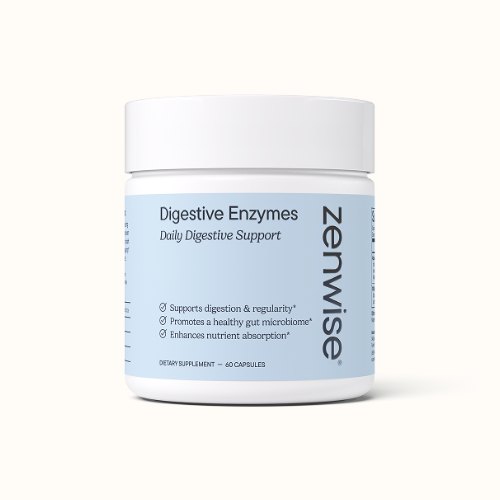
Zenwise Digestive Enzymes
An enzyme-and-probiotic combination built around a 400mg blend rather than one dominant ingredient.
- Format
- Capsule
- Type
- Digestive enzyme
- Cost
- See the price on Amazon
- Customer rating
- 4.9 out of 5 from 3,815 ratings from zenwise.com
Not sure it suits your symptoms? The quiz matches one product to you in one to three minutes.
What customers consistently report
- Easier digestion and less bloating after meals
- Noticeably better after heavier meals
- An easy habit to keep at every meal
Those are the themes that recur across the reviews. Moderate review confidence — 4.9 from 3,815 reviews on the brand’s own store (zenwise.com).
The mechanism, as the brand describes it
This capsule tries to cover several meal components at once: its enzyme blend is intended to break down food, while the added probiotic component is meant to complement that approach. For someone unsure whether a particular food component is behind occasional discomfort, that breadth is the appeal. It is also the weakness. Ten enzymes are listed, but the label gives only a 400 mg blend total rather than an amount or activity for each enzyme, so there is no way to judge whether the enzyme that matches a meal is present at a meaningful amount. The same pooling applies to its ten probiotic strains. A blend is therefore a hedge against not knowing what is needed, not a demonstration that all of its parts will matter. Meal-focused logic does not settle effectiveness for occasional discomfort, despite the convenient use pattern.
What has actually been tested
For the lead probiotic strain, Bacillus subtilis DE111, an FDA safety notice cites trials with no reported adverse effects and one 105-day trial finding a healthier bowel index versus placebo. A separate double-blind pilot trial of 46 people over four weeks found immune-marker changes but reported gastrointestinal health was largely unaffected, and the authors flagged the study may have been underpowered — a useful reminder that clinically studied does not automatically mean clinically effective for digestive symptoms specifically. A related but different strain showed a real bloating improvement in its own six-week trial, but that is not the strain used here.
What the panel prints, and what it leaves out
The label discloses total blend weights for the enzyme and probiotic components but does not break out individual amounts for each of the 10 listed enzymes or 10 listed probiotic strains. The brand claims third-party testing without naming a certifying organization, and the product discloses sulfites as an ingredient.
Herb entries for what is in it.





When it makes sense
Its symptom profile covers bloating, gas, symptoms that follow particular foods and general abdominal discomfort. It fits someone whose priority is handling meals or day-to-day comfort. Which product the quiz lands on also turns on what you have already tried, the format you prefer, and any exclusions that apply to you.
Where it falls short of the brief
No dietary claim is recorded for it, so none is assumed here. It is a capsule taken as often as the label directs, and the quiz asks whether that is a routine you will keep.
Side effects and what to be aware of
The label states the product contains sulfites.
Would the quiz pick this for you?
Tell the quiz your symptoms, what you have tried and any medicines you take; it ranks Digestive Enzymes against the rest and shows its reasons.
Take the quiz →Free. Private. Nothing to sign up for.
Its peers in the catalog
Taken with meals: that is the job Zenwise Digestive Enzymes does, and these are the other entries doing it.
See all the products we have researched →
Further reading
The guides behind the category, written from the trials rather than the labels.