
Taken with meals
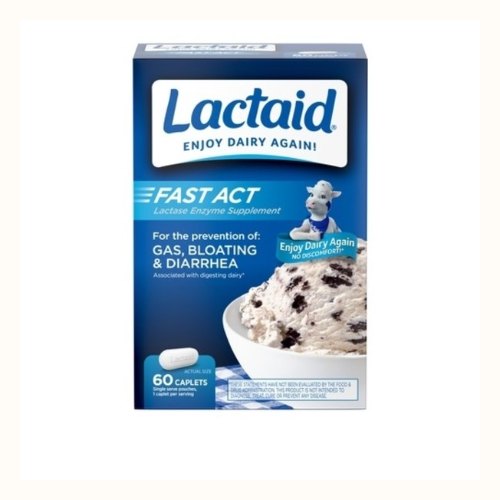
Lactaid Fast Act Caplets
For when dairy specifically is the thing that sets you off.
What Lactaid Fast Act caplets do: each supplies 9,000 FCC units of lactase, the enzyme that splits lactose into glucose and galactose before it reaches the bacteria in the colon, where undigested lactose ferments into gas. The timing is the whole trick, and the label is blunt about it: taken too early, or after you have started eating, the enzyme has no lactose to work on. The evidence is for the ingredient at a higher dose than this caplet: a placebo-controlled crossover trial of three 4,500 FCC tablets (13,500 FCC in total) before a lactose load cut breath hydrogen by 55% with fewer symptoms, and no trial of this branded 9,000 FCC caplet was found. Lactaid side effects: the retail pages we read list none for the caplet, whose only active is the enzyme. The reviews, the trial and the label are below.
- Format
- Capsule
- Type
- Digestive enzyme
- Cost
- $0.20 a day
- Customer rating
- 4.5 out of 5 from 1,543 ratings from Walmart
What customers consistently report
- Being far stronger than regular-strength lactase
- Heading off symptoms before they start
- Single-caplet travel packs
Those are the themes that recur across the reviews. High review confidence.
Why it might work
Lactase splits lactose into glucose and galactose before the lactose can reach colonic bacteria, where fermentation can produce gas and related discomfort. That is a direct match for dairy being the specific trigger, rather than a broad attempt to cover every type of meal problem. Timing is central: taking a 9,000 FCC caplet with the dairy meal puts the enzyme alongside its lactose substrate, whereas taking it too early or after eating can leave it with little useful work to do. The 9,000 FCC caplet is two-thirds of the 13,500 FCC taken in the cited crossover trial, which did not test this branded caplet. A single disclosed active also makes the logic easy to assess. A clear lactose-digestion mechanism still cannot prove that this product addresses every dairy-related symptom.
What the research supports
Ingredient-level evidence at a higher dose than this product. A crossover placebo-controlled trial gave three 4,500 FCC lactase tablets (13,500 FCC in total) before a lactose load and cut breath hydrogen by 55% with fewer symptoms. This caplet supplies 9,000 FCC each; no trial of the branded product was found.
What the label discloses
The active is disclosed as lactase 9,000 FCC units per caplet with a short, conventional excipient list. No third-party testing, GMP or allergen statement appears on the brand page.
Who this tends to suit
We match this product to people reporting bloating, gas, symptoms that follow particular foods, cramping, loose stools and general abdominal discomfort. It fits someone whose priority is handling meals, day-to-day comfort or pain and tenderness. Whether it is the best fit for you depends on the rest of your answers — what you have already tried, what format you will take, and anything that has to be ruled out.
Where it may not fit
The label supports dairy-free, no added sweeteners and minimal ingredient list. A capsule only works if you will take it as often as the label directs.
Side effects and what to be aware of
Timing is everything — taken too early or after you have started eating, the label says it cannot do its job.
Common questions
What do Lactaid pills do?
They supply lactase, the enzyme that splits lactose into glucose and galactose before the lactose can reach the bacteria in the colon, where fermentation produces gas and related discomfort. Each Fast Act caplet contains 9,000 FCC units of lactase, and the excipient list is short and conventional.
Does Lactaid work?
The evidence is for the ingredient at a higher dose than this caplet. A placebo-controlled crossover trial gave three 4,500 FCC lactase tablets (13,500 FCC in total) before a lactose load and cut breath hydrogen by 55% with fewer symptoms. This caplet supplies 9,000 FCC, two-thirds of that dose, and no trial of the branded caplet was found.
What are the side effects of Lactaid?
The retail pages we read list no side effects for the caplet, whose only active ingredient is the enzyme lactase. The complaint that does recur is that it did nothing, and the label’s explanation is timing: taken too early, or after you have started eating, the enzyme has little lactose to work on.
When should you take Lactaid?
With the dairy, not before it and not after it. Taking a 9,000 FCC caplet with the dairy meal puts the enzyme alongside its lactose; the label says that taken too early or after you have started eating it cannot do its job.
What is the active ingredient in Lactaid?
Lactase, disclosed at 9,000 FCC units per caplet. No third-party testing, GMP or allergen statement appears on the brand page.
Is this the right one for you?
The quiz works out which of the products we have researched fits your symptoms, your routine and what you have already tried — and tells you plainly if none of them do.
Take the quiz →Free. Private. Nothing to sign up for.
Others we researched for the same job
These sit in the same role as Lactaid Fast Act Caplets — taken with meals — so they are the sensible things to weigh it against.
See all the products we have researched →
Related reading
Background on how this type of product works, read from the trial evidence.