Discomfort and cramping
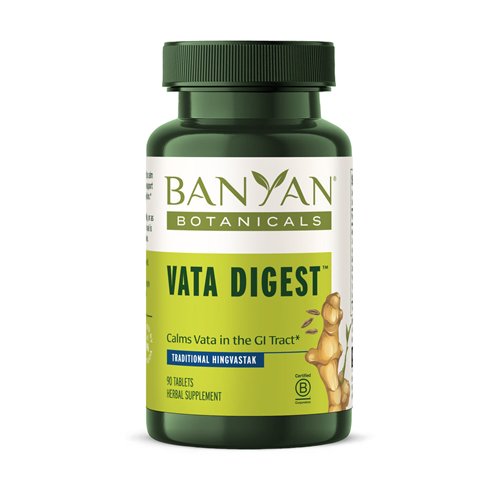
Banyan Botanicals Vata Digest
A two-tablet Ayurvedic spice blend of ginger, cumin, black pepper and asafoetida, sold for post-meal gas and bloating and described by the brand as warming.
- Format
- Tablet
- Type
- Herbal and traditional herbal
- Tradition
- Ayurvedic formula
- Cost
- $0.64 per day at two tablets ($28.99 for 90); the label allows one to two tablets once or twice a day, $0.32 to $1.29
- Customer rating
- 4.6 out of 5 from 125 ratings from Amazon
The themes in the reviews
- Less bloating and gas after meals
- A warm, settled feeling in the stomach
- The brand’s customer service and range
Those are the themes that recur across the reviews. Moderate review confidence — Amazon shows 4.6 from 125 ratings and Banyan’s own Judge.me widget shows 4.65 from 51 reviews, but no Trustpilot product score or other independent retailer rating was read.
Why it might work
Banyan describes this as a warming blend traditionally used to calm vata in the digestive tract, where the tradition describes vata as cold, light and dry and, in excess, tied to gas, bloating and hard stools. In Ayurvedic terms the herbs are heating and pungent, meant to kindle the digestive fire the tradition calls agni. In modern terms, ginger, cumin, black pepper, celery seed and asafoetida are carminative spices, and ginger has been shown to speed gastric emptying in a small trial. The label gives one weight for the blend, so the dose of any spice cannot be compared with the trials. Banyan’s own page says the blend may aggravate pitta.
What the trials show
No trial of this blend or of the classical hingvastak formula in people was found; the only formula-level study is a rat ulcer study. Trials of single ingredients exist: ginger sped gastric emptying in 11 people with functional dyspepsia (12.3 against 16.1 minutes) without changing symptoms, a food-grade asafoetida extract improved dyspepsia scores in 43 people over 30 days, and black cumin seed oil lowered a dyspepsia index in 70 people over 8 weeks. Those trials used single ingredients at 250 mg to several grams a day, and this label gives one 1,000 mg figure for ten items.
What the label discloses
The panel is a single 1,000 mg proprietary blend per two tablets, with ten ingredients listed in order and no per-herb amounts. Banyan states third-party testing for arsenic, cadmium, lead and mercury and compliance with the ANSI 173 and AHPA guidelines, but it publishes no results, lab name or certificate for this product. The bottle states it is made in India, certified organic by QAI, and distributed from Albuquerque.
Read more on the plants in the formula: Amla, Ginger, Black pepper, Long pepper, with the trials, doses and cautions for each.
Who this tends to suit
Its symptom profile covers bloating, gas, general abdominal discomfort and symptoms that follow particular foods. It is scored for a goal of day-to-day comfort or handling meals. Whether it is the best fit for you depends on the rest of your answers — what you have already tried, what format you will take, and anything that has to be ruled out.
Where it may not fit
The label supports gluten-free, dairy-free and vegan. If you are pregnant or breastfeeding or taking prescription medication, expect Vata Digest to be missing from your results on purpose; that decision is routed to a clinician, not made here. Like any tablet, it depends on being taken as often as the label directs.
Reactions and warnings
A few reviewers report more gas and burping at first or only a subtle effect. The label says not to use it during pregnancy and to ask a practitioner if nursing, taking medications or with a medical condition.
The questions that come up
Does Banyan Vata Digest work?
No published trial tests this blend. Single ingredients in it have small trials, such as ginger speeding gastric emptying in 11 people and asafoetida improving dyspepsia scores in 43 people, at doses the one blend weight cannot be compared with. On Amazon 78 percent of 125 ratings are five stars.
Is Banyan Vata Digest safe?
The label says not to use it during pregnancy and to consult a practitioner if nursing, taking medications or with a medical condition. Banyan states third-party testing for arsenic, cadmium, lead and mercury but publishes no results. A 2008 JAMA study found detectable lead, mercury or arsenic in 20.7 percent of 193 Ayurvedic products bought online, which is class context rather than data on this product.
What are the side effects of Vata Digest?
The label lists none beyond its warnings. One 2-star reviewer reported more gas and burping after two weeks, and Banyan’s own review summary mentions increased gas at first for a few customers. Banyan lists the blend as heating and says it may aggravate pitta.
How much does Vata Digest cost?
$28.99 for 90 tablets on the brand site and on Amazon, which is a 45-day supply at two tablets a day, or about $0.64 a day. The label allows one to two tablets once or twice a day, so $0.32 to $1.29 a day. Banyan offers a 90-day return for a refund of the price paid.
Vata Digest vs Pitta Digest: what is the difference?
Vata Digest is a warming blend led by amla, cumin, black pepper, celery seed and ginger, with black cumin, long pepper, mineral salt, fenugreek and asafoetida. Pitta Digest is a cooling blend of amla, guduchi, cumin, coriander, fennel, celery seed, licorice, cardamom and cinnamon. Both are 1,000 mg proprietary blends per two tablets, and Banyan lists Vata Digest as heating and Pitta Digest as cooling.
A word before buying. Anyone pregnant or breastfeeding, or taking prescription medication should run Vata Digest past a doctor or pharmacist. What is written here is research, not medical advice.
Is Vata Digest the one, or is something else?
The quiz weighs your symptoms and routine and names one match, which may or may not be Vata Digest.
Take the quiz →Free, private, and it names one product.
Alternatives in the same role
Discomfort and cramping: that is the job Banyan Botanicals Vata Digest does, and these are the other entries doing it.
See all the products we have researched →
Background reading
Where the numbers on this page come from, explained at length.