
Taken with meals
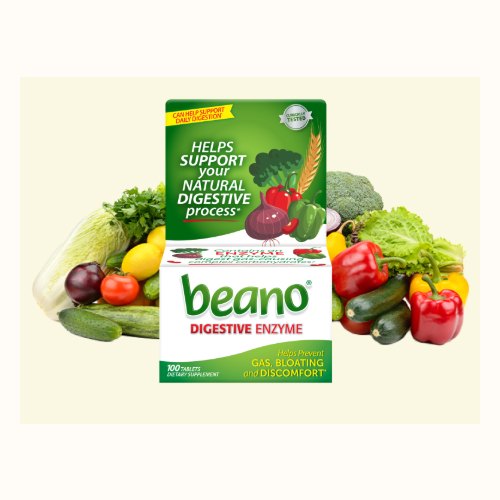
Beano Digestive Enzyme Tablets
An alpha-galactosidase tablet taken with beans, lentils and cruciferous vegetables so the sugars in them are split before they ferment.
- Format
- Tablet
- Type
- Digestive enzyme
- Cost
- $0.24 a day
- Customer rating
- 4.6 out of 5 from 19,844 ratings from Amazon
What customers consistently report
- Being able to eat beans and vegetables that used to cause gas
- Working within the meal when taken at the first bite
- Small tablets that are easy to swallow or chew
Those are the themes that recur across the reviews. High review confidence — 4.6 from 19,844 Amazon ratings on the 100-tablet listing.
Why it might work
Beans, lentils, chickpeas, broccoli, cabbage and whole grains contain sugars called galacto-oligosaccharides that human enzymes cannot break down, so they pass intact to the colon, where bacteria ferment them and produce gas. Alpha-galactosidase is the enzyme that splits those sugars. Taken with the first bite, it works on them in the stomach and small intestine before they reach the bacteria, which is why the timing on the label is not optional and why it does nothing for gas from dairy, fat or fructans.
What the research supports
Ingredient-level evidence at doses that bracket this product. A double-blind crossover trial in 19 adults fed a meatless chili found significantly less flatus with 240 units of alpha-galactosidase. A 2007 placebo-controlled trial found 1,200 units, but not 300, cut both breath hydrogen and flatulence after a bean-heavy meal. A 2013 randomized, double-blind trial in children found the enzyme reduced gas-related symptoms against placebo. Beano tablets are labeled at 300 GALU each and the directions are two per meal, so a standard 600-unit dose sits above the 240 units that worked in 1994 and between the 300 that did not and the 1,200 that did in 2007. No trial of the branded tablet was found.
What the label discloses
The active is stated as alpha-galactosidase at 300 GALU per tablet, sourced from Aspergillus niger. Other ingredients are cellulose gel, mannitol, potato starch, magnesium stearate, colloidal silica and calcium gluconate. No third-party testing certificate, allergen statement or gluten-free claim is published on the listing.
Who this tends to suit
We match this product to people reporting bloating, gas, symptoms that follow particular foods and general abdominal discomfort. It fits someone whose priority is handling meals or day-to-day comfort. Whether it is the best fit for you depends on the rest of your answers — what you have already tried, what format you will take, and anything that has to be ruled out.
Where it may not fit
The label supports no added sweeteners. A tablet only works if you will take it as often as the label directs.
Side effects and what to be aware of
It only works on the sugars it was made for — the galacto-oligosaccharides in legumes, brassicas and whole grains — and only if it is in the stomach with the food, so a tablet after the meal or with dairy or fatty food does nothing. A minority report nausea. The label says ask a doctor first if pregnant or nursing.
Is this the right one for you?
The quiz works out which of the products we have researched fits your symptoms, your routine and what you have already tried — and tells you plainly if none of them do.
Take the quiz →Free. Private. Nothing to sign up for.
Others we researched for the same job
These sit in the same role as Beano Digestive Enzyme Tablets — taken with meals — so they are the sensible things to weigh it against.
See all the products we have researched →
Related reading
Background on how this type of product works, read from the trial evidence.