
Parasite cleanses
Thorne Berberine
A 1,000 mg berberine capsule from a certified manufacturer, with the strongest human evidence in this section — for something else.
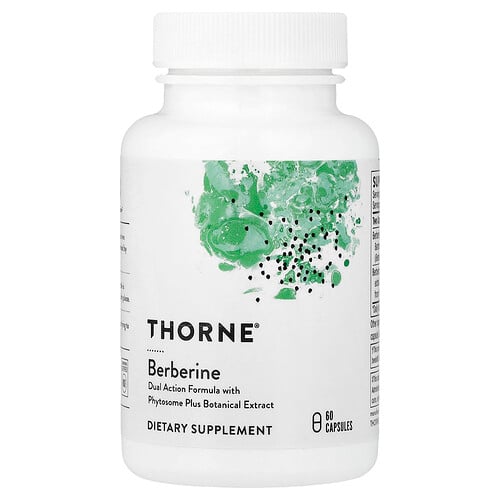
- Format
- Capsule
- Type
- Botanical antimicrobial
- Cost
- ~$2.93 a day at the full label dose, about $1.47 at the lowest
- Customer rating
- 4.4 out of 5 from 6,514 ratings from Amazon
What customers consistently report
- Appetite and cravings dropping off, which is the single most common report
- No taste and easy to swallow
- Being able to move the dose up or down a capsule at a time
Those are the themes that recur across the reviews. High review confidence on volume — 6,514 Amazon ratings at 4.4. iHerb displays individual reviews for the same bottle but the aggregate did not render, so Amazon is the only average we can quote.
Why it might work
Berberine is a named compound rather than a vague cleanse blend, and its most credible rationale is metabolic and microbiome-related rather than antiparasitic. It can influence metabolic signaling and gut bacteria, which fits the fact that its human research is about blood sugar and liver-fat outcomes, not about clearing intestinal organisms. Thorne states 1,000 mg per two-capsule serving, split between berberine HCl and a phytosome form, with no proprietary blend; the full label range includes the 1,500 mg daily amount used in the diabetes trial. That dose match and NSF Contents Certified label are concrete advantages over products with unknown ingredient amounts. They do not mean the metabolic results hold for every use, and they do not support a parasite-cleanse or microbial-overgrowth claim. Stomach upset and clinically meaningful drug-interaction potential are part of the same real-world picture. A starting hypothesis is not proof of benefit, especially where stomach upset and drug interactions are material.
What the research supports
Berberine has the best human evidence of anything in this section, and it is metabolic rather than antimicrobial. The pivotal study randomized people with type 2 diabetes to berberine 1,500 mg a day against metformin for 13 weeks and saw HbA1c fall from 9.5% to 7.5%, but it had no placebo group. A later placebo-controlled phase 2 trial in fatty liver disease was largely null on glucose, insulin and insulin resistance, with a liver-fat benefit only at the higher dose. What none of it shows is that berberine clears a parasite or a microbial overgrowth. The 1,500 mg used in the diabetes trial does at least sit inside this product’s label range, which is more than most products here can say.
What the label discloses
The strongest quality signals in this section. The retail listing carries NSF Contents Certified, meaning an outside body verified that what is on the label is in the bottle, and the full panel is published and independently mirrored in the NIH Dietary Supplement Label Database. A serving of two capsules gives 1,000 mg of berberine, split between berberine HCl and a phytosome form, with only a capsule shell and calcium laurate alongside — no proprietary blend. On safety, LiverTox rates berberine as an unlikely cause of clinically apparent liver injury. One caveat worth naming: Thorne’s own product page for this item was unreachable when we checked, so the label values here come from Amazon, the NIH database and the Mayo Clinic Store.
Where it may not fit
The label supports gluten-free, dairy-free and minimal ingredient list. We flag this product for anyone pregnant or breastfeeding or taking prescription medication, which is a caution about who should be deciding, not a claim about the product. A capsule only works if you will take it as often as the label directs.
Side effects and what to be aware of
Stomach upset is the recurring complaint — nausea, gas, heartburn and constipation. Thorne’s own label says do not use this product if you are pregnant, nursing or trying to conceive, which is firmer than most. The interaction warning is the part that matters most: the label states berberine reduces the activity of the liver enzymes CYP2D6, CYP2C9 and CYP3A4, and that is not theoretical. In a randomized trial in 52 kidney-transplant patients taking cyclosporine, adding berberine left their blood cyclosporine concentration 29.3% higher than the control group. If you take prescription medication, this one needs a pharmacist or clinician to look first.
Before you take this. Speak to a doctor or pharmacist first if you are pregnant or breastfeeding, or taking prescription medication. Nothing on this page is medical advice, and no supplement diagnoses, treats, cures or prevents disease.
Is this the right one for you?
The quiz works out which of the products we have researched fits your symptoms, your routine and what you have already tried — and tells you plainly if none of them do.
Take the quiz →Free. Private. Nothing to sign up for.
Others we researched for the same job
These sit in the same role as Thorne Berberine — parasite cleanses — so they are the sensible things to weigh it against.
See all the products we have researched →
Related reading
Background on how this type of product works, read from the trial evidence.